Introduction: A Legacy Turns Black
For nearly four decades, the Blue Screen of Death (BSOD) has been an unmistakable symbol of frustration for Windows users. But Microsoft has officially repainted this legacy — the BSOD is now black. This change isn’t just cosmetic; it’s part of a broader push toward resilience, usability, and modern user experience.

The CrowdStrike Outage: A Wake-Up Call
In 2024, a major CrowdStrike outage disrupted over 8.5 million Windows devices, temporarily paralyzing airports, media outlets, government services, and businesses worldwide. The scale and swiftness of this incident highlighted a critical need: stronger built-in system recovery and protection.
Windows Resiliency Initiative: Future-Proofing PCs
In response, Microsoft introduced the Windows Resiliency Initiative — a comprehensive strategy focused on embedding proactive security and recovery features deeper into the operating system.
Machine Recovery & System Security
A key feature includes quick machine recovery, which helps computers bounce back after failed restarts. This means fewer interruptions and faster operational continuity, especially vital for enterprise environments.
UI Simplicity vs. Legacy Symbolism
Microsoft’s decision to update the error screen’s design is explained as part of a “simplified UI.” While visually minimalistic, changing from blue to black marks a significant break from decades of Windows history.
Why Replace the Blue Screen?
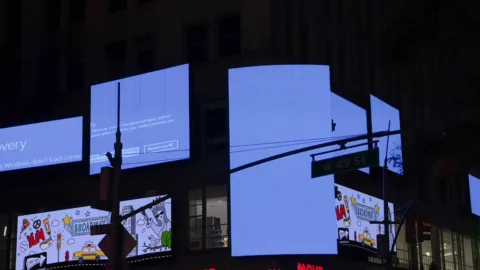
The blue error screen has long been the subject of internet memes, frustration, and technical lore. But in a world of viral social media and global brand perception, the sight of Times Square plastered with blue error screens became more than a minor embarrassment — it became a reputational risk.
Switching to a black screen is part of Microsoft’s effort to modernize and professionalize its interface while subtly distancing itself from those visual triggers of unreliability.
A Look Back at the BSOD Legacy
First introduced in Windows 1.0 (1985), the BSOD was a raw dump of technical error codes meant for developers. Since then, it’s become a cultural icon of digital frustration. Back when it launched, HTML didn’t exist, Germany was divided, and Mark Zuckerberg was still in diapers.
Now, after nearly 40 years, we say goodbye to the familiar cobalt screen and hello to a sleeker black interface, signaling a new era.
What This Means for Users & Businesses
This change is symbolic but also strategic. By prioritizing machine resilience, security integration, and interface clarity, Microsoft is preparing Windows for a future where stability and trustworthiness are paramount.
For IT teams and businesses, these enhancements offer more than just aesthetic upgrades — they translate to real reductions in downtime, better user experiences, and less panic when errors arise.
Final Thoughts: Embracing Change with Trenzest
At Trenzest, we keep you informed on the latest developments in tech that shape both enterprise and consumer experiences. Whether it’s Windows updates, cybersecurity trends, or digital transformation strategies, we provide actionable insights to help you stay ahead.
As Windows phases out the blue and embraces the black, one thing is clear: the tech world never stops evolving — and neither should you.
Want more insights like this?
Subscribe to the Trenzest newsletter for weekly updates on technology, innovation, and smart business strategies.