
Introduction: A Glimpse Into the Future
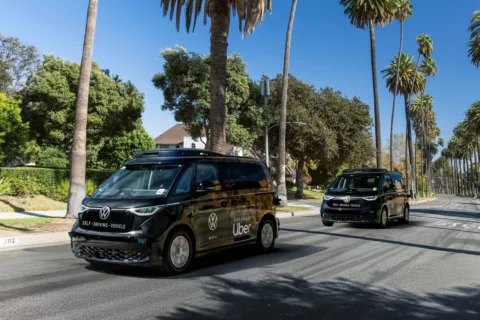
The mobility landscape is undergoing a seismic transformation—and Volkswagen of America and Uber are steering the wheel. In a strategic move poised to reshape urban transportation, the two companies have announced plans to deploy a commercial robotaxi service powered by autonomous, all-electric VW ID. BUZZ vehicles. This ambitious collaboration begins with Los Angeles, aiming for a late 2026 launch.
As cities grow denser and the demand for sustainable, tech-driven solutions rises, autonomous mobility is no longer a futuristic concept—it’s an evolving reality.
The Partnership: Volkswagen and Uber Join Forces
Volkswagen and Uber’s collaboration is more than a simple business agreement—it’s a signal that autonomous electric vehicles (EVs) are ready to enter the mainstream. By combining VW’s manufacturing prowess and technological innovation with Uber’s vast ride-hailing infrastructure, the partnership creates a formidable blueprint for the robotaxi industry.
According to Christian Senger, CEO of Volkswagen Autonomous Mobility, “Volkswagen is not just a car manufacturer—we are shaping the future of mobility. Our collaboration with Uber accelerates that vision.”
Timeline and Rollout Strategy
Los Angeles will be the first testbed for this venture, with commercial operations slated to begin by late 2026. Initially, the robotaxi fleet will not be fully driverless. Human safety operators will remain behind the wheel during early operations, with the expectation of transitioning to full autonomy by 2027.
This phased approach provides ample time to refine the technology, obtain necessary permits, and address public safety and trust—critical for widespread adoption.
Safety and Regulatory Compliance
Before hitting the streets, Volkswagen ADMT (Autonomous Driving Mobility & Transport)—a subsidiary of Volkswagen of America—must obtain permits from California’s Department of Motor Vehicles (DMV) and the California Public Utilities Commission. These agencies regulate autonomous vehicle testing and commercial ride-hailing services, respectively.
Testing in Los Angeles will begin later this year, pending approval. This proactive strategy reflects a commitment to regulatory transparency and public accountability.
Technology Behind the Robotaxis
The ID. BUZZ robotaxis are equipped with autonomous technology developed by Mobileye, an industry leader in self-driving systems. This partnership emerged after Volkswagen and Ford shut down their previous AV venture with Argo AI, redirecting efforts toward more promising alliances.
The combination of Mobileye’s robust autonomous tech and VW’s electric ID. BUZZ platform presents a compelling case for scalability and reliability in urban environments.
Volkswagen ADMT: A Strategic Pivot
Volkswagen ADMT is not just another player in the AV game—it’s a strategic pivot after the fall of Argo AI. Since launching publicly in July 2023, ADMT has deployed a test fleet of ten autonomous ID. BUZZ vans in Austin, Texas, laying the foundation for its larger vision.
Interestingly, while Volkswagen has previously stated it’s not pursuing its own ride-hailing service, this partnership with Uber suggests a clear intent to become a major supplier of autonomous EVs and fleet management systems.
Uber’s Expanding Autonomous Ecosystem
For Uber, this partnership is part of a larger push to solidify its role as the platform of choice for AV companies. The ride-hailing giant already has alliances with over 14 autonomous vehicle firms, including Waymo, with services recently launched in Austin and soon in Atlanta.
By integrating with trusted OEMs like Volkswagen, Uber is not only hedging its AV bets but creating a seamless ecosystem that blends convenience, safety, and cutting-edge innovation.
Implications for the Mobility Industry
This collaboration could set a new benchmark for what’s possible in autonomous mobility. It offers a model that merges:
Scalable electric vehicle platforms
Advanced AI-driven autonomous systems
Real-world commercial applications through existing ride-hailing infrastructure
For startups and businesses in mobility, tech, and sustainability, this is a masterclass in ecosystem thinking—leveraging partnerships to build what would be difficult to achieve alone.
What This Means for Innovation and Business
The autonomous revolution is not just about cars—it’s about reimagining logistics, urban planning, and customer experience. Whether you’re a tech innovator or an entrepreneur exploring automation, partnerships like this show how critical collaboration and agile pivots are in driving meaningful progress.
This is exactly the type of trend we dive deep into at Trenzest—your go-to platform for decoding future-forward tech for real-world business impact.
Final Thoughts: The Road Ahead
As Volkswagen and Uber gear up to launch their robotaxi service, the road ahead is both exciting and complex. Regulatory hurdles, public acceptance, and technical refinement all lie ahead—but the momentum is undeniable.
Autonomous mobility is not just coming—it’s being built city by city, with collaborative efforts like this paving the way.
Explore More with Trenzest
At Trenzest, we analyze tech disruptions that shape industries. From AI to autonomous vehicles, we empower tech enthusiasts, entrepreneurs, and marketers with the insights they need to stay ahead of the curve.
📩 Subscribe to our newsletter to stay updated on automation, AI, and future-ready strategies.