Introduction
In an age of digital geopolitics, national security, and data privacy, the story of TikTok’s ban and its entanglement with U.S. tech giants offers a compelling case study on the intersection of government regulation and corporate agility. A recent revelation involving high-level correspondence between the U.S. Department of Justice and major tech firms sheds new light on how companies like Google, Apple, Microsoft, and Amazon navigated this sensitive issue—legally and strategically.
Background: TikTok, National Security, and the Federal Ban
In 2024, TikTok came under intense scrutiny from U.S. lawmakers over concerns about its Chinese ownership and the potential risks it posed to national security. As a result, the app was effectively banned under a law that prohibited U.S. companies from distributing or supporting TikTok’s digital operations.
The federal directive, reinforced by an executive order from President Donald Trump, pressured tech platforms to cease all services to TikTok unless significant structural changes were made—most notably, a reduction in Chinese ownership.
The Legal Gray Area: Tech Giants Receive Letters of Assurance
Despite the official ban, companies like Apple and Google re-listed TikTok on their app stores after a brief 26-day hiatus. How? Internal government communications, disclosed publicly only recently, reveal that acting and subsequent U.S. Attorneys General issued letters assuring these companies that they would not be held liable for continuing to support TikTok.
The first batch of letters—dated January 30—was sent to Google, Apple, Microsoft, and Fastly, stating explicitly that these companies had “incurred no liability” and could continue their operations under the scope of the executive order without fear of prosecution.
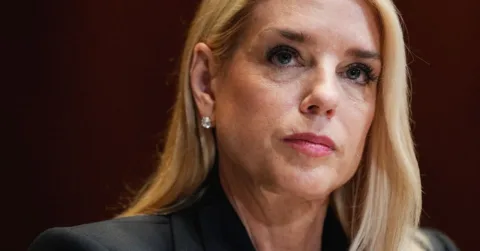
Pam Bondi, who assumed the role of Attorney General in February, reaffirmed this position. Her letters further stated that the U.S. Department of Justice was “irrevocably relinquishing any claims” against the companies for any perceived violations.
Behind the Scenes: How the Letters Were Unearthed
These correspondences remained under wraps until software engineer Tony Tan, invoking the Freedom of Information Act (FOIA), requested documentation on the DOJ’s communications regarding TikTok. Initially denied, Tan filed a lawsuit which led to the release of several key letters.
This transparency raises critical questions about how information flows between the government and private sector—and who gets to control the narrative.
Corporate Response: What Big Tech Did Next
Following Bondi’s assurances, major firms resumed operations with TikTok. Microsoft, Amazon, Digital Realty, T-Mobile, Oracle, and others received similar letters by March and April 2024. However, not all letters contained identical language, creating inconsistencies that worried legal experts and watchdogs alike.
While some firms welcomed the relief, others remained cautious, continuing to seek legal clarification, especially given the unpredictability of future administrations.
Legal Ramifications and Future Risks
Although the letters offered temporary protection, legal experts argue that these assurances might not be binding under future leadership. Tony Tan’s lawsuit against Alphabet (Google’s parent company) underscores the lingering uncertainty—could a different administration retroactively challenge these non-prosecution promises?
The broader implication is that companies operating in regulated sectors must be prepared for sudden shifts in legal interpretation, policy, and enforcement.
What This Means for the Tech Ecosystem
This episode offers a wake-up call for companies—especially startups and platforms operating globally. The key takeaway is not just about TikTok, but about how quickly business landscapes can change when geopolitics, law, and public perception collide.
Enterprises must invest in compliance intelligence, policy monitoring, and scenario planning. For digital marketers and tech entrepreneurs, understanding these dynamics isn’t optional—it’s mission-critical.
The Trenzest Perspective: Navigating Complex Regulatory Landscapes
At Trenzest, we specialize in helping forward-thinking companies stay ahead of regulatory disruptions. Our intelligence platforms monitor emerging policy shifts, enabling businesses to respond strategically rather than reactively.
For example, by integrating real-time legal analysis with data-driven insights, Trenzest empowers clients to:
Anticipate market volatility
Identify hidden legal exposures
Build agile compliance frameworks
Whether you’re a CMO navigating adtech regulations or a founder expanding into international markets, Trenzest provides clarity in an increasingly opaque world.
Final Thoughts
The story of TikTok, the DOJ, and Silicon Valley highlights more than a legal loophole—it underscores the high-stakes interplay between technology and governance. Companies that rely solely on short-term reprieves risk long-term instability.
The smart path forward? Build regulatory fluency, embed compliance into strategy, and partner with experts like Trenzest to proactively shape your operational risk posture.