
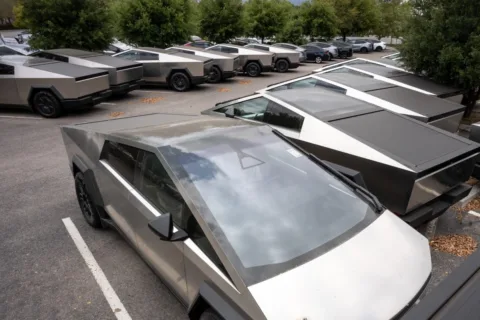
Introduction: The Trade-In Gate Opens
Tesla has officially begun allowing Cybertruck owners to trade in their vehicles—marking a pivotal change in policy. Since its highly anticipated launch, the Cybertruck has made headlines for its bold design, premium pricing, and media-fueled hype. But now that owners can finally part ways with their futuristic pickup, many are discovering a harsh reality: their Cybertruck’s value has taken a substantial hit.
Cybertruck Depreciation: By the Numbers
According to CarGurus, Tesla Cybertrucks are experiencing depreciation rates of up to 45%. A recent Business Insider report revealed that one owner who purchased a $100,000 AWD 2024 Cybertruck and drove it for 19,623 miles received a trade-in offer of $63,100—a 37% drop. Another owner of the high-end $127,000 Cyberbeast was offered $78,200, resulting in a 38% loss in under a year.
Such depreciation is alarming, particularly for a vehicle that was initially difficult to obtain and came with a resale ban.
The Resale Ban and Its Implications
Tesla initially prohibited Cybertruck resales, a strategy often employed by automakers to prevent price inflation in secondary markets. However, some speculate that this restriction also served to delay a wave of negative PR tied to quality control issues, including faulty trims and even reports of unintended acceleration.
Moreover, Elon Musk’s divisive political affiliations may have contributed to owner dissatisfaction, pushing some to consider an early exit from their investment.
Factors Behind Rapid Depreciation
Several factors contribute to the steep value drop:
Brand reputation volatility
Limited aftermarket support
High mileage depreciation
Negative early reviews and recalls
Unlike traditional vehicles, the EV market—especially newer models—tends to experience rapid devaluation, as seen with many tech-forward products.
EV Depreciation Trends Compared
The Cybertruck’s depreciation is not an isolated case. According to Wired, electric vehicles across the board can lose up to 50% of their value in the first year. This is primarily due to:
Rapid advancements in EV technology
Generous tax credits on new models
Limited used EV market demand
These factors make it crucial for potential EV buyers to assess long-term value, not just upfront appeal.
What This Means for EV Owners and Buyers
If you’re considering an electric vehicle, particularly a high-priced model like the Cybertruck, understanding depreciation is key. Trade-ins will rarely match private sale values, and early adopters often pay a premium for being first.
Final Thoughts: Navigating the EV Market with Confidence
Tesla’s move to allow Cybertruck trade-ins marks a significant shift in strategy—but it also exposes the volatile nature of EV valuation. Owners looking to sell should consider private listings for better returns and be aware of the broader industry trends affecting resale value.
To stay informed and make smarter tech and investment decisions, follow Trenzest for expert commentary, in-depth market analysis, and guides tailored to future-focused consumers.