Introduction: A Bold Move in the Heart of Texas
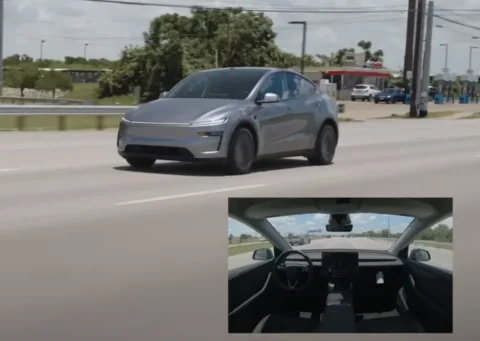
In a dramatic display of innovation and ambition, Tesla recently showcased what CEO Elon Musk called the company’s first “autonomous delivery” of a vehicle. A Model Y SUV navigated roughly 15 miles from Tesla’s Gigafactory in Austin to the new owner’s apartment—without a human onboard and, allegedly, without remote intervention.
While this eye-catching stunt made headlines and temporarily boosted Tesla’s stock price, it also reignited debates about the readiness and reliability of autonomous driving systems.
Inside Tesla’s First Autonomous Vehicle Delivery
Tesla’s demonstration featured a Model Y equipped with the same software used in its limited robotaxi pilot in South Austin. After delivery, the vehicle was downgraded to Tesla’s commercially available Full Self-Driving (Supervised) software, which still requires driver oversight.
According to Musk, this particular trip was fully autonomous—no one behind the wheel, and no remote operator intervening. However, many questions remain unanswered.
The Self-Driving Journey: Complexity and Context
The route chosen wasn’t trivial. It included merging onto highways, navigating a small roundabout, turning right on red, and executing an unprotected left turn—maneuvers that have historically challenged autonomous systems.
Having driven in this South Austin neighborhood, I can attest that the route poses real-world complexity, even under ideal conditions. Tesla released a full 30-minute video of the journey and a sped-up 3.5-minute version, showcasing the vehicle’s impressive navigation capabilities.
But one successful ride isn’t enough. The real question is whether this performance is replicable at scale.
A Look Back: Tesla’s History with Promotional Stunts
This isn’t the first time Tesla has blurred the line between innovation and marketing. In 2016, Tesla released a video of a self-driving vehicle in the Bay Area that was later revealed to be staged. Tesla engineer Ashok Elluswamy admitted in a 2022 deposition that the route was pre-mapped, rehearsed, and not reflective of the software’s real-time capabilities.
Musk was reportedly closely involved in that production too. This historical context casts a shadow over current claims, leading skeptics to question how much of the Austin delivery was choreographed behind the scenes.
The Technology Behind the Wheel
Tesla’s self-driving stack relies primarily on camera-based vision systems, diverging from industry standards that incorporate lidar and radar for redundancy and precision. Interestingly, lidar-equipped Tesla vehicles were spotted in South Austin, suggesting the company may be using such hardware for mapping or internal development—even if not included in consumer-facing models.
This raises important questions:
Was the route pre-mapped using lidar-equipped vehicles?
Can Tesla’s system reliably repeat the drive without intervention?
Until Tesla provides more transparency, we’re left speculating.
How Tesla Compares to Other Autonomous Leaders
Tesla isn’t alone in the driverless race. Competitors like Waymo and Zoox are also pushing boundaries:
Waymo: Operating autonomous vehicles on highways in Phoenix, Los Angeles, and San Francisco—currently for employees only.
Zoox: Successfully completed fully driverless rides in Las Vegas on 45-mph roads and side streets.
Each company is taking a different approach, but all share the same end goal: safe, scalable autonomy.
Scaling the Autonomous Dream: What’s Next?
The real test of Tesla’s autonomous ambitions lies not in isolated stunts but in scalability. Can Tesla run this delivery route safely and reliably hundreds or thousands of times? That’s what regulators, consumers, and investors will want to see before placing full trust in the technology.
It’s worth noting that Musk has long promised a coast-to-coast autonomous drive—from Los Angeles to New York—with zero interventions. That feat remains unrealized nearly a decade later.
Why This Matters to Tech Enthusiasts, Entrepreneurs, and Marketers
For tech enthusiasts, this event signifies a tangible step forward in the long-promised future of autonomy. For entrepreneurs, it underscores a shift toward AI-driven logistics and delivery—markets ripe with opportunity. And for marketers, it’s a lesson in the power of bold narratives to shape public perception and stock market behavior.
Autonomous vehicles aren’t just changing how we drive—they’re changing how we build, sell, and experience technology.
The Trenzest Perspective: Real-World Impacts and Insights
At Trenzest, we specialize in tracking and analyzing emerging tech trends like autonomous transportation. Whether you’re a startup founder, an investor, or a digital strategist, our resources help you understand the landscape and act on data-driven insights.
Conclusion: The Road Ahead for Autonomous Driving
Tesla’s autonomous delivery in Austin is undeniably impressive—but it’s not conclusive. The event may mark progress, but it also echoes a familiar pattern of hype, opacity, and delayed promises.
What remains clear is that the autonomous revolution is coming—whether it arrives next quarter or next decade.
And when it does, Trenzest will be here to help you navigate it.