
1. Introduction: The Evolution of Wearable Technology
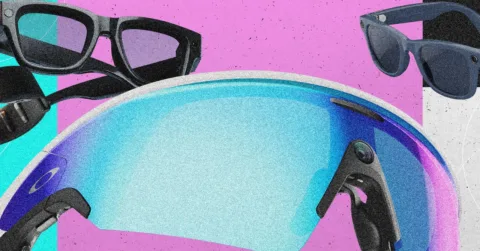
Wearable technology has rapidly evolved from fitness trackers to fully integrated smart devices. Today, the competition among tech giants is shifting toward augmented reality (AR) wearables—devices that merge digital content with our physical world. Meta, in collaboration with Ray-Ban and Oakley, is taking bold steps forward with its new generation of smart glasses, promising a future where our interactions with technology are more natural, seamless, and immersive.
2. Meta Ray-Ban Display: Blending AI and Augmented Reality
2.1 Gesture Control and Natural Interactions
One of the most exciting innovations in the Meta Ray-Ban Display glasses is gesture recognition. Instead of always speaking to the glasses, users can perform subtle hand gestures that the glasses detect without needing exaggerated movements. It may take a moment to get used to not holding your hand directly in front of you, but soon the process becomes second nature.
2.2 Visual AI Enhancements
While Meta AI voice commands remain central to the experience, the real breakthrough lies in visual augmentation. Features like live speech captioning and instant language translation no longer require users to glance at their phones—captions and translations now appear directly on the lenses. Imagine asking, “Hey Meta, what am I looking at?” and instantly receiving contextual, visually enriched information displayed right before your eyes.
Navigation also gets a futuristic twist. Instead of checking your smartphone, the glasses overlay turn-by-turn walking directions directly onto your surroundings, creating a seamless blend of digital assistance and real-world exploration.
2.3 Handwriting Recognition and the Neural Band
For moments when speaking aloud isn’t possible, Meta has developed handwriting recognition powered by its Neural Band. By tracing letters with your finger on a flat surface—or even your leg—users can generate text messages without ever needing a keyboard. Although this feature won’t be available at launch, it highlights Meta’s vision for making AR glasses more versatile and accessible.
2.4 Current Limitations and What’s Next
Like any first-generation product, there are limitations. At launch, Spotify integration is restricted to playback controls and track information, while Instagram support is limited to Reels and messaging. Still, Meta has ambitious plans to expand these integrations, unlocking more robust use cases in future updates.
3. Design and Usability: Slimmer Frames, No Puck Required
Previous prototypes, like the Orion model, relied on an external processing puck to deliver advanced AR functions. The new Ray-Ban Display model removes this dependency, resulting in slimmer frames and a more practical everyday design. While the AR feature set isn’t as comprehensive as full-fledged AR glasses, this trade-off makes the glasses more comfortable and stylish for daily use.
4. Pricing, Availability, and Buying Experience
The Meta Ray-Ban Displays will launch on September 30 in black and sand finishes, priced at $799. Initially, purchases will only be available in-store in the U.S. due to the need for wristband fitting and a guided onboarding experience. Limited quantities will be available, and international markets won’t see a release until early 2026.
5. Oakley Meta Vanguard: The Sports Enthusiast’s Dream
5.1 Camera and Recording Capabilities
Meta has also partnered with Oakley to create the Meta Vanguard, designed for adventure seekers. Featuring a 12MP ultrawide camera with a 122-degree field of view, the Vanguard is perfect for POV sports videos and immersive action captures. Recording options include 3K video, slow motion, and hyperlapse, making it a viable alternative to traditional action cameras like the GoPro.
5.2 Built for Adventure: Waterproofing and Audio Upgrades
Durability is a major selling point. With an IP67 waterproof rating, the Vanguard is the most rugged pair of Meta glasses to date. To combat wind noise during high-speed activities, Meta has enhanced the onboard speakers—now 6 decibels louder—and integrated a five-microphone array for clear voice commands even in extreme conditions.
6. What This Means for the Future of AR Wearables
Meta’s dual approach—creating stylish lifestyle glasses like the Ray-Ban Display alongside performance-driven wearables like the Oakley Vanguard—signals a broader ambition: to normalize AR in everyday life. The future of wearables isn’t about choosing between utility and style, but about merging them into one seamless experience.
7. How Trenzest Helps You Stay Ahead in Emerging Tech
At Trenzest, we help entrepreneurs, tech enthusiasts, and marketers understand how innovations like Meta’s smart glasses are reshaping industries. From digital transformation insights to emerging technology trends (explore more here), we provide actionable strategies for staying ahead in an ever-changing market.
Whether you’re curious about how AR can improve customer engagement, enhance storytelling, or redefine e-commerce experiences, Trenzest offers the guidance you need to leverage these innovations for growth.
8. Conclusion: The Dawn of Everyday Augmented Reality
Meta’s latest smart glasses may still have limitations, but they represent a pivotal step toward making augmented reality a mainstream reality. With the Ray-Ban Display offering lifestyle convenience and the Oakley Vanguard pushing the boundaries of sports tech, Meta is laying the foundation for a future where AR wearables are as common as smartphones.
As these technologies evolve, staying informed is critical. Trenzest is here to keep you ahead of the curve, helping you understand, adopt, and thrive in the world of emerging technologies.