
Introduction
The recent immigration raid at Hyundai’s sprawling factory in Ellabell, Georgia, has shaken not only the company but also the economic and political ties between South Korea and the United States. Touted by U.S. officials as the “largest single-site enforcement operation” in history, the raid detained nearly 500 workers, most of them South Korean nationals.
While immigration enforcement is not new, the scale and timing of this operation have created ripples across international relations, regional economies, and global trade dynamics.
The Scale of the Raid and Its Immediate Impact
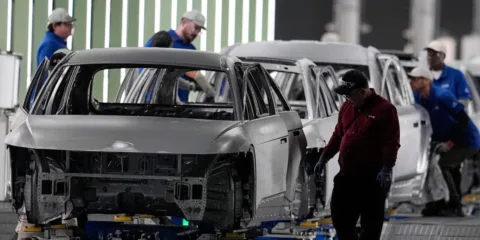
The Hyundai facility in question is the company’s largest manufacturing site in the American South—a $7.59 billion “Metaplant” project, jointly developed with LG Energy Solutions, expected to generate over 8,500 jobs. Still under construction in parts, the factory represents Hyundai’s biggest bet on U.S. soil.
The raid disrupted operations, unsettled local communities, and drew attention from both political leaders and industry observers. Hyundai’s partners, including LG Energy Solutions, quickly emphasized that their “top priority is ensuring the safety and well-being of employees and partners.”
Hyundai’s Strategic Role in the American South
3.1 The Rise of Southern Manufacturing
Over the past two decades, the American South has transformed into a global auto-manufacturing hub. Once grappling with high unemployment and industrial decline, states like Georgia and Alabama are now powerhouses attracting billions in foreign direct investment (FDI).
3.2 Hyundai’s Longstanding U.S. Investments
Hyundai has been at the heart of this transformation. Its first major U.S. plant opened in Montgomery, Alabama, in 2002, followed by another in West Point, Georgia, in 2009. Together, these projects created thousands of jobs and revitalized local economies.
Today, Hyundai and its affiliates support nearly 30,000 direct and indirect U.S. jobs. Industry experts believe the company has no plans to scale back operations, especially given its record-breaking sales growth in recent years.
South Korea’s Diplomatic and Political Challenges
4.1 President Lee Jae Myung’s Balancing Act
For South Korea’s President Lee Jae Myung, the raid presents a thorny dilemma. Domestically, he must reassure supporters who favor cooperation with the U.S. but are wary of policies perceived as hostile. Internationally, he must safeguard South Korea’s alliance with Washington, especially amid ongoing trade negotiations and strategic defense partnerships.
4.2 Reactions from Seoul and Washington
South Korea has already secured a deal to release more than 300 detained workers, arranging a charter plane to repatriate them. Meanwhile, U.S. officials reaffirmed their commitment to enforcing federal immigration laws while continuing to position America as the premier destination for global business.
Economic Ripple Effects and Industry Response
5.1 LG Energy Solutions and Battery Joint Ventures
The raid affected around 250 employees linked to HL-GA Battery Company, a Hyundai–LG Energy joint venture. This incident underscores how immigration enforcement can disrupt high-value supply chains in industries critical to the future of mobility, particularly electric vehicles (EVs).
5.2 The Broader Impact on Jobs and Local Economies
Beyond the immediate fallout, the raid raises questions about how such disruptions could affect ongoing projects, local job markets, and the broader investment climate in the South. For communities that have relied on Hyundai and other foreign manufacturers to drive economic revitalization, stability is critical.
Global Trade Relations and the Future of Auto Manufacturing
The U.S.–South Korea economic relationship extends far beyond one factory. South Korea recently announced $150 billion in U.S. investments, with Hyundai contributing $26 billion to projects including new steel plants and EV production facilities. These investments are central to America’s strategy of building domestic capacity in advanced manufacturing.
Disruptions like this raid risk sending mixed signals to global investors. While the U.S. remains attractive for capital, sudden enforcement actions may cause uncertainty in boardrooms abroad.
The Bigger Picture: Immigration, Policy, and International Business
At its core, this raid highlights the tension between domestic immigration enforcement and the imperatives of global trade. Companies that operate across borders must constantly navigate changing policies, legal frameworks, and political landscapes.
For multinational corporations like Hyundai, the ability to maintain compliance while protecting employees and sustaining production is a delicate balancing act.
Why Incidents Like This Matter for Businesses and Investors
For entrepreneurs, investors, and marketers, the Hyundai raid is more than a news headline—it’s a case study in risk management, global strategy, and the interconnectedness of modern supply chains. The incident demonstrates how quickly political and regulatory changes can impact billion-dollar industries.
Trenzest Insights: Navigating Policy Shifts in Global Business
At Trenzest, we analyze emerging trends at the intersection of policy, technology, and global markets. This incident illustrates why businesses must stay agile, anticipate regulatory shifts, and prepare contingency strategies.
By leveraging expert insights, companies can better align with evolving laws while protecting their investments and workforce.
Conclusion
The Hyundai immigration raid is more than a single enforcement action—it is a pivotal event shaping U.S.–South Korea relations, southern manufacturing, and global trade confidence. While the fallout continues, one lesson is clear: international businesses must be prepared for volatility in the global regulatory environment.
Hyundai’s deep investments suggest its U.S. operations will endure, but the incident underscores the importance of vigilance, diplomacy, and adaptability in today’s interconnected economy.
For forward-thinking businesses, staying informed and proactive is not optional—it’s essential. That’s where Trenzest can help you stay ahead.