
Introduction: Beyond the Gimmicks
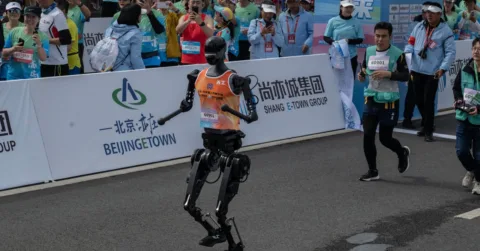
When most people imagine humanoid robots, they often picture machines that dance, perform martial arts, or even run marathons. While these feats are certainly eye-catching, experts argue they offer little insight into the robots’ actual utility in real-world environments. As Fern, a robotics expert, puts it: “People are going to get bored of dancing and karate.” The industry is shifting focus—from spectacle to substance.
The Race That Sparked the Debate
A recent robot race in China brought together a range of humanoid robots, all vying to demonstrate their capabilities. The rules were simple: each robot had to be bipedal. Beyond that, anything was fair game. The participants varied dramatically—from a crowd favorite sporting a blue-and-white tracksuit to Tiangong Ultra, the 5’9” winner of the race.
While the event was entertaining, it also highlighted a crucial point: many of these robots are still not ready for prime time.
Bipedal Bots and Engineering Ingenuity
Creativity was on full display during the race. Some robots wore kid-sized sneakers—screwed onto their feet to prevent slippage—while others donned knee pads to cushion inevitable falls. Most robots had their fingers removed and some were even headless, a strategic move to reduce weight and motor strain.
The intention behind these design choices was clear: engineers were willing to sacrifice aesthetics and human likeness for performance optimization.
The Good, The Bizarre, and The Malfunctioning
Two robots, Tiangong Ultra and N2 from Noetix Robotics, performed admirably with a consistent—if slow—pace. But the majority of the competition revealed just how far the industry still needs to go.
Huanhuan, a humanoid with a disturbingly realistic head, moved at a snail’s pace while shaking violently.
Shennong, equipped with drone propellers and mounted on eight wheels, looked more like a sci-fi villain than a next-gen solution. It spun in circles at the starting line, crashed into a wall, and nearly took down its human operators.
In several cases, duct tape became the most reliable problem-solving tool. From creating impromptu robot shoes to reattaching heads, it was clear that these machines are still highly dependent on human intervention.
Form vs. Function: What Actually Matters
The real question is: what do these robots actually achieve?
Running a marathon or performing choreographed dances may generate headlines, but they do little to show whether a robot can, say, stock shelves, handle logistics, or assist the elderly. According to Fern, the true benchmarks of success lie in how well robots can execute complex, real-world tasks without step-by-step instructions.
Why Real-World Applications Matter Now More Than Ever
With increasing labor shortages and a growing interest in automation across industries, the spotlight is shifting toward utility-focused robotics.
From manufacturing and agriculture to healthcare and retail, the need for robotic assistance that offers tangible ROI is clear. For example, warehouse automation robots like those from Boston Dynamics or autonomous delivery bots by Starship Technologies are being deployed for specific, value-driven tasks—not entertainment.
At Trenzest, we continuously track the evolution of emerging tech to help businesses understand how they can incorporate automation meaningfully. Learn more in our guide on AI-powered automation for small businesses.
How Companies Can Leverage Robotics for Practical Growth
Businesses looking to adopt robotic technologies should focus on the following criteria:
1. Task Relevance
Does the robot solve a specific problem your business faces daily?
2. Ease of Integration
Can the robot be deployed with minimal disruption to existing workflows?
3. Reliability and Support
Does the provider offer ongoing maintenance, software updates, and training?
4. Cost vs. ROI
Are you investing in a long-term asset that will save time or reduce labor costs?
When implemented thoughtfully, robots can empower teams rather than replace them—freeing up human workers for more strategic or creative responsibilities.
Conclusion: The Shift Toward a More Useful Robotic Future
The race in China, while whimsical, emphasized a pivotal moment in robotics. Humanoid robots are entertaining, yes—but the future lies in functionality over flair.
As we enter a new era of innovation, the priority must shift to how these machines can contribute meaningfully to real-world challenges. Whether it’s in logistics, manufacturing, or even customer service, the next generation of humanoids will need to do more than dance. They’ll need to deliver.