Introduction
When a relatively unknown startup named OpenAI introduced its conversational AI, ChatGPT, in late 2022, it didn’t just launch a product — it ignited an entire era of accelerated AI innovation. This “ChatGPT moment” fundamentally altered how industries viewed and adopted artificial intelligence, from everyday users to Fortune 500 companies.
But what did this seismic shift look like from the perspective of Google, a company that had long been considered the leader in AI? For years, Google had quietly developed AI models, infrastructure, and research breakthroughs. And yet, OpenAI captured the public’s imagination first.
The Birth of a New AI Era
The release of ChatGPT was a watershed moment in technology. Within weeks, the chatbot reached millions of users, sparking conversations about the future of work, education, marketing, and more. Microsoft’s backing of OpenAI amplified the impact, positioning it as a direct challenger to Google’s long-standing dominance in AI.
According to The New York Times, Google’s leadership reportedly declared a “code red,” recognizing the need to respond quickly and strategically.
A Tech Giant Caught Off Guard
While Google had its own powerful AI technologies—like LaMDA (Language Model for Dialogue Applications)—the company had not yet released a consumer-facing chatbot. The sudden popularity of ChatGPT forced Google to reconsider its timeline and priorities.
This wasn’t the first time Google had faced disruption from a smaller, more agile company. But unlike previous shifts, this one involved a core technology that Google itself helped pioneer.
Sundar Pichai’s Perspective at Dreamforce
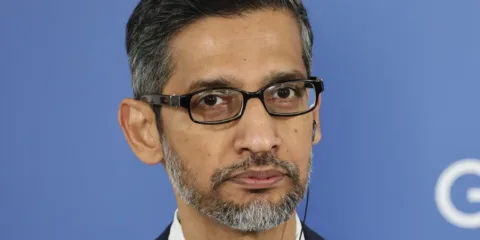
During Salesforce’s Dreamforce event, CEO Marc Benioff asked Sundar Pichai, Google and Alphabet’s CEO, about that moment. Pichai acknowledged that while Google was already far along in AI development, OpenAI had “put it out first.”
“Credit to OpenAI—they launched ahead of us,” Pichai admitted.
“We were ready, but we hadn’t reached the point where we felt the product met Google’s standards.”
For Pichai, the launch of ChatGPT wasn’t a threat so much as a clear signal that the landscape had shifted. Rather than panic, Google recalibrated.
Why Google Didn’t Launch First
Google’s hesitancy wasn’t about a lack of capability—it was about reputation and risk management. Unlike a startup, Google operates under intense global scrutiny. A flawed product launch could undermine years of trust built with billions of users.
“We knew in a different world, we would’ve probably launched our chatbot maybe a few months down the line,” Pichai said. “But it still had a lot of issues at that time.”
The company’s caution was strategic, reflecting a balance between innovation and responsibility.
Strategic Shifts: Google’s “Code Red” Moment
Internally, Google responded swiftly:
Redirection of teams toward accelerating AI products.
Integration of advanced models into search and workspace tools.
Prioritizing speed without compromising standards.
This mirrors how many enterprises today pivot when faced with disruptive technologies—a strategy startups and marketers can learn from.
A Familiar Pattern: Google vs. Startups
Pichai also drew parallels to earlier moments in Google’s history. When YouTube burst onto the scene in 2006, Google was developing video search but hadn’t launched a major product yet. Similarly, Facebook faced competition from Instagram in the photo-sharing space.
Both times, a nimble startup beat a giant to market, but Google adapted and eventually integrated or acquired competitors to maintain leadership. The ChatGPT moment echoed that familiar pattern—only now, the stakes were much higher.
Reputation, Risk, and Responsibility
The reputational risk Pichai referenced is crucial in understanding why major corporations often move more cautiously than startups. OpenAI could experiment and iterate publicly, while Google had to protect its brand trust with billions of daily users.
In March 2023, Google finally released its chatbot—Bard, which was later rebranded as Gemini. This launch marked Google’s full entry into the generative AI race.
Trenzest and the Modern AI Landscape
Today, platforms like Trenzest help businesses and marketers navigate these rapid technological shifts. While big tech companies battle for AI leadership, entrepreneurs and brands can leverage platforms like Trenzest to:
Monitor emerging tech trends in real time.
Understand the market impact of AI launches.
Position their own products and services strategically.
For startups, knowing when and how to act can be just as important as having the technology itself.
Lessons for Innovators and Marketers
The ChatGPT moment offers actionable lessons:
Speed matters, but timing matters more. Launching first can be a huge advantage.
Brand trust influences launch strategies. Established companies must weigh risks differently.
Adaptability wins. Giants like Google can pivot fast, but smaller players can innovate even faster.
Trend intelligence is crucial. Tools like Trenzest empower decision-makers to stay ahead of market shifts.
The Road Ahead for Google and AI
As of today, the AI landscape is more competitive than ever. Google, OpenAI, Anthropic, and others are racing to build models that define the future of search, productivity, and creativity.
For Google, the challenge isn’t just catching up—it’s redefining leadership in a transformed market.
Conclusion
The launch of ChatGPT was a defining moment in AI history—not just for OpenAI but for the entire tech ecosystem. Google’s response illustrates how even the largest players must adapt to disruption with agility and strategy.
For innovators, entrepreneurs, and marketers, moments like these are not just news—they’re opportunities. Platforms like Trenzest can help you understand these shifts, make data-driven decisions, and act strategically in a rapidly evolving landscape.