
Introduction: The Rise of AI-Powered Development
Artificial intelligence continues to evolve, transforming how businesses, developers, and startups approach software development. In a significant step forward, Google has officially launched Jules, its AI-powered, asynchronous coding agent, following a successful beta phase. This move marks a pivotal moment for AI-assisted development and signals Google’s growing commitment to intelligent developer tools.
What Is Jules? Key Features Explained
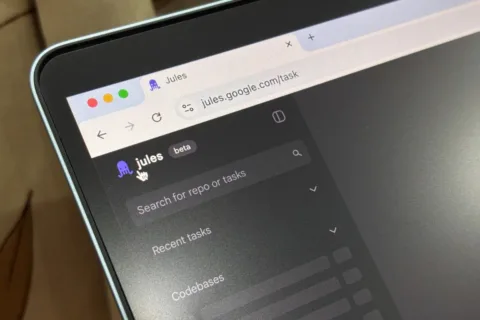
Jules is an AI coding agent developed by Google and powered by Gemini 2.5 Pro, designed to automate and streamline development tasks asynchronously. Originally introduced as a Google Labs project, it is now available more broadly with structured pricing plans and improved capabilities.
Gemini Integration
At the heart of Jules is Gemini 2.5 Pro—Google’s advanced large language model (LLM). This engine enables Jules to understand, modify, and improve codebases autonomously, learning from real-world developer patterns.
How Jules Works
Unlike traditional synchronous agents, Jules operates asynchronously in virtual machines on Google Cloud. Developers assign coding tasks—such as debugging, refactoring, or feature development—and let Jules run them independently.
Once a task is kicked off, developers can step away and focus on higher-level work. This is a key differentiator from tools like Cursor or Windsurf, which require constant user interaction.
Key highlights:
Integration with GitHub repositories
Automatic branch creation and pull request management
Support for multimodal inputs
Code improvement at scale

From Beta to Public Release: What’s New?
After its debut at Google I/O and months of refinement, Jules is now publicly available with polished features and updated usage models.
Refined Task Limits and Pricing Tiers
During beta testing, users could complete up to 60 daily tasks. The official release introduces new pricing tiers:
Introductory Free Plan: 15 tasks/day, 3 concurrent tasks
AI Pro Plan: $19.99/month, 5× higher task limit
AI Ultra Plan: $124.99/month, 20× higher task limit
These tiers reflect real usage data, allowing developers to scale according to their needs. Kathy Korevec, Director of Product at Google Labs, noted that pricing was driven by observed demand and task behavior.
“The 15/day is designed to give people a sense of whether Jules will work for them on real project tasks.” — Kathy Korevec, Google Labs
Privacy Policy Enhancements
One of the most critical updates is a clarified privacy policy. Public repositories may be used for training data, while private repositories remain fully secure, with no data used for model training. This change ensures transparency and builds trust among developers.
GitHub Integration and Environment Snapshots
Jules now supports:
Auto-generated pull requests
Environment Snapshots to store dependencies and install scripts
These features reduce redundancy and enhance consistency across projects, especially useful for teams collaborating across different environments.
Why Jules Stands Out From the Competition
In a crowded market of AI development tools, Jules distinguishes itself through asynchronous execution, seamless cloud integration, and automated GitHub workflows. Most alternatives—like Lovable or Windsurf—require synchronous prompting, slowing down multitasking.
With Jules:
Developers can queue multiple tasks and walk away
Output is delivered autonomously, improving productivity
It supports advanced workflows without constant supervision
This hands-free approach is ideal for agencies, tech startups, and enterprise teams looking to optimize time and code quality simultaneously.
Mobile Usage and Developer Trends
According to SimilarWeb, Jules has seen over 2.28 million visits globally, with 45% of traffic from mobile devices. India, the U.S., and Vietnam are currently the top regions.
Even without a native mobile app, many developers are using Jules through its web-based UI. This indicates a growing demand for mobile-first coding agents, prompting Google to explore mobile-optimized features in future updates.
Additionally, Jules now works with empty repositories, allowing even non-developers or beginners to test its capabilities from scratch.
Jules Meets Trenzest: Bridging Innovation and Efficiency
At Trenzest, we’re always evaluating emerging AI tools that align with real-world business needs. Jules exemplifies the type of automation and intelligent tooling we champion across our AI innovation services.
By combining Jules’ autonomous coding with Trenzest’s tailored strategy and implementation, businesses can:
Accelerate product development
Prototype MVPs faster
Reduce developer workload
If you’re an entrepreneur, CTO, or agency lead, Trenzest can help you integrate tools like Jules into your workflow, transforming your development pipeline.
The Future of AI Agents in Development Workflows
Jules is more than just another AI code assistant—it’s a glimpse into the future of autonomous software engineering. As AI agents become more capable, we’ll likely see:
Autonomous bug fixing at scale
AI-led testing and deployment
Continuous integration pipelines managed entirely by AI
Google’s use of Jules internally signals confidence in its long-term viability. Expect it to be at the center of many Google Labs projects moving forward.
Final Thoughts and Next Steps
Jules represents a powerful shift in how we think about software development—from hands-on coding to intelligent delegation. With its public launch, developers, startups, and enterprises now have access to a tool that learns, adapts, and scales.