Background: Epic vs. Apple
In 2020, Fortnite—a flagship battle royale game from Epic Games—was removed from Apple’s App Store. The removal stemmed from Epic bypassing Apple’s in-app purchase system and offering direct payments at a 20% discount, prompting a swift takedown and a high-stakes legal showdown.
Fortnite’s Removal and the Legal Fallout
Epic’s decision to circumvent Apple’s fee structure led to an antitrust lawsuit. The developer argued that Apple’s control over in-app payments was monopolistic. Apple countered that Epic had violated the App Store’s guidelines. The lawsuit marked one of the most significant tech antitrust cases in recent years, garnering attention from both regulators and developers worldwide.
The Turning Point: Epic’s Court Victory
Fast-forward to 2024, U.S. District Judge Yvonne Gonzalez Rogers ruled that Apple had been in “willful violation” of competition laws. The judge ordered Apple to allow third-party payment systems and banned it from charging fees on those transactions.
Earlier this month, Epic resubmitted Fortnite to the App Store. However, delays and pushback led the company to accuse Apple of stalling the process. Judge Rogers responded swiftly, stating Apple must either approve the submission or justify its rejection legally.
Fortnite’s Return: What’s New?
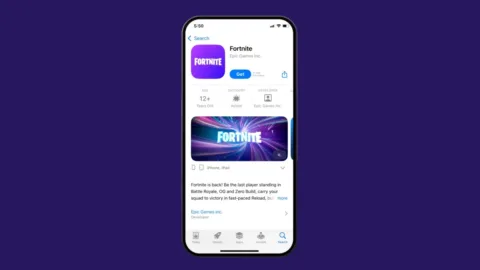
Fortnite has officially returned to the U.S. App Store and is also available in the EU through the Epic Games Store and AltStore. Notably, the game now offers players a 20% cashback on in-game purchases made directly through Epic’s payment system—bypassing Apple’s in-app purchasing model.
This update aligns with the court’s ruling and signals a major shift in the mobile gaming and app distribution landscape.

Image Credits: Epic Games
Implications for Developers and the App Ecosystem
This case sets a powerful precedent for app developers. For years, creators have been bound by Apple’s 15-30% commission on all in-app transactions. With this ruling, developers can now explore direct monetization methods, improving profitability and reducing platform dependency.
Why This Matters to the Digital Economy
The Fortnite-Apple saga isn’t just a gamer’s concern—it reflects deeper tensions in the digital economy. It raises essential questions about platform power, competition, and user choice. By reducing gatekeeping, this ruling may usher in a more open and innovative digital marketplace.
Moreover, it encourages budding developers and marketers to reimagine their monetization strategies without being constrained by legacy platform fees.
Trenzest’s Take: Navigating the Platform Power Shift
At Trenzest, we’re focused on helping creators and entrepreneurs adapt to paradigm shifts in technology. This ruling is a strong signal that platform decentralization is not only possible but inevitable. Our resources are tailored to guide you through strategic transitions, whether you’re building an app, launching a digital product, or optimizing your revenue model.
Want to stay ahead of tech and digital business trends? Subscribe to our Trenzest newsletter for expert insights and practical strategies.
Conclusion: A New Era of App Store Freedom
The return of Fortnite to the App Store marks a monumental shift in the app development landscape. Thanks to Epic’s resilience and the court’s ruling, developers now have more autonomy over how they monetize and engage with users.
As the dust settles, one thing is clear: control over app ecosystems is beginning to democratize. This is a win for developers, a wake-up call for tech giants, and an opportunity for anyone entering the app economy.
Stay informed, stay empowered—and explore how Trenzest can help you navigate the new digital frontier.