Introduction: The xAI-X Deal
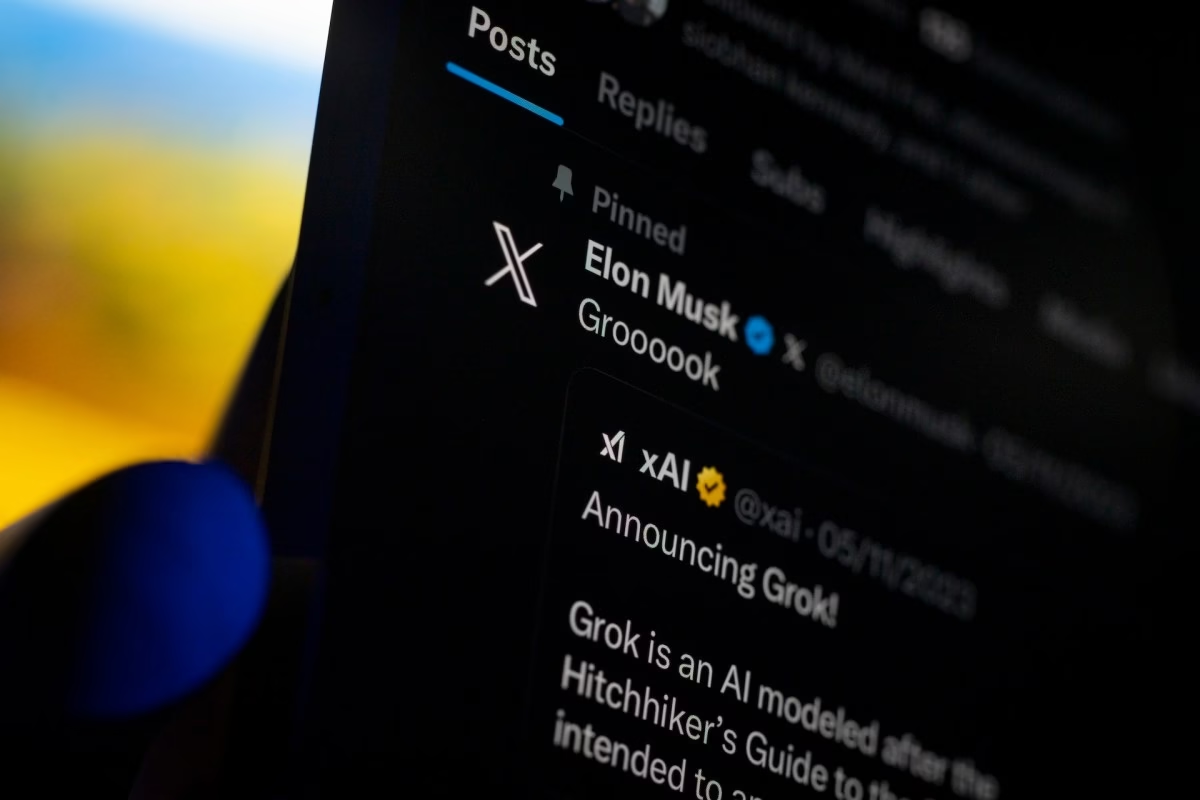
When Elon Musk announced that his AI startup, xAI, would acquire X (formerly known as Twitter) in an all-stock transaction, the tech and investment world took notice. On the surface, the move raised eyebrows—especially given X’s financial struggles and Musk’s hefty $44 billion acquisition price tag.
However, upon closer examination, the deal reveals a deeper narrative: Musk’s long-standing ambition for artificial general intelligence (AGI) dominance, and a broader strategy that binds his many ventures together under a single, interwoven vision.

Beyond the Surface: The Musk Investment Philosophy
Investing in a Musk-led company isn’t merely a financial decision—it’s buying into the mythos of Musk. Returns are not promised by quarterly earnings but by the promise of disruptive innovation across industries.
While critics often highlight Musk’s pattern of overpromising and underdelivering, markets have increasingly embraced narrative-driven investments. As discussed on Trenzest, storytelling and vision now wield as much influence as balance sheets.
The Rise of “Elon, Inc.”
According to Yoni Rechtman, principal at Slow Ventures, Musk’s empire already operates like a single conglomerate:
“It’s all already Elon, Inc. People work across multiple companies. They share resources, capital, and strategies.”
This blurring of corporate lines means synergies—both real and perceived—between companies like Tesla, SpaceX, Neuralink, The Boring Company, xAI, and now X, reinforce Musk’s ecosystem.
In essence, the xAI-X merger simply formalized an already existing reality.
Investor Loyalty Across the Musk Ecosystem
Major investment firms such as Baron Capital, 8VC, Andreessen Horowitz, DFJ Growth, Fidelity Investments, and even Saudi Arabia’s Public Investment Fund (PIF) have invested across multiple Musk enterprises.
Ron Baron, founder of Baron Capital, epitomizes Musk’s investor philosophy:
“Every single thing [Musk] does is helping everything else he does.”
This interconnected support system illustrates how Musk’s ecosystem amplifies investor returns—but also heightens exposure to interconnected risks.
Valuations Built on Vision, Not Revenue
Skepticism arose when xAI’s valuation skyrocketed to $80 billion despite limited revenue, and X’s value rebounded to $33 billion.
However, Musk’s ventures often trade on future potential, not present-day performance.
Take Tesla as an example. Despite operating with automotive industry margins, Tesla commands tech stock multiples, bolstered by dreams of self-driving cars and humanoid robots.
Gene Munster, managing partner at Deepwater Asset Management, summarized Musk’s unique investor appeal:
“It’s not about the numbers this year; it’s about the long-term future.”
Munster’s firm, an early investor in X, xAI, and Tesla, exemplifies the long-term loyalty Musk cultivates.
The High-Risk, High-Reward Dynamic
While the consolidated Musk empire presents immense upside potential, it also introduces compounding risks.
Dan Wang, a professor at Columbia Business School, highlights that concentrated ownership structures can amplify vulnerabilities—from regulatory probes to leadership distractions.
In Musk’s case, the Securities and Exchange Commission (SEC) lawsuit over alleged disclosure violations when acquiring Twitter/X presents immediate risk. Future penalties could create ripple effects across Musk’s interconnected ventures.
Data Privacy, Regulation, and Legal Headwinds
Regulatory scrutiny extends beyond financial filings.
X’s decision to quietly opt all users into AI model training has drawn investigations from the Irish Data Protection Commission (DPC) under Europe’s GDPR laws.
Moreover, emerging global frameworks around AI accountability—seen in both Europe’s AI Act and California’s draft regulations—introduce additional hurdles.
As Wang explained:
“There isn’t a consensus on AI regulation yet, but responsibility will increasingly fall on model creators and distributors.”
Is Musk Spreading Himself Too Thin?
Another risk: Musk’s divided attention.
Yoni Rechtman notes that Musk’s focus appears fragmented across Tesla, SpaceX, xAI, X, and political endeavors, including vocal support for certain 2024 presidential candidates.
This diffusion of focus could weaken operational execution—a critical vulnerability for ecosystems reliant on charismatic, hands-on leadership.
Key Takeaways for Entrepreneurs and Marketers
Musk’s empire offers lessons for leaders and marketers alike:
Vision is powerful, but must eventually be supported by results.
Narrative-driven growth can rally investors, users, and employees—but requires careful expectation management.
Cross-company synergies amplify strengths but also magnify weaknesses.
Regulatory awareness and proactive compliance will be crucial as AI oversight intensifies.
Founder branding can be a double-edged sword; scaling beyond a single personality is key for long-term resilience.
Understanding and applying these principles can significantly enhance strategic decision-making for startups and growth-stage businesses.
Final Thoughts: The Future of the Elon Ecosystem
The xAI-X merger underscores a simple truth: Musk isn’t just building companies—he’s building an ecosystem.
Success across Tesla, SpaceX, Neuralink, The Boring Company, X, and xAI is no longer isolated. Wins and losses are shared, magnified, and amplified through Musk’s larger-than-life vision.
At Trenzest, we continue to monitor how visionary founders reshape industries and investment strategies.
As with Musk’s ventures, the future belongs to those bold enough to connect narratives, technology, and opportunity into something greater than the sum of its parts.