
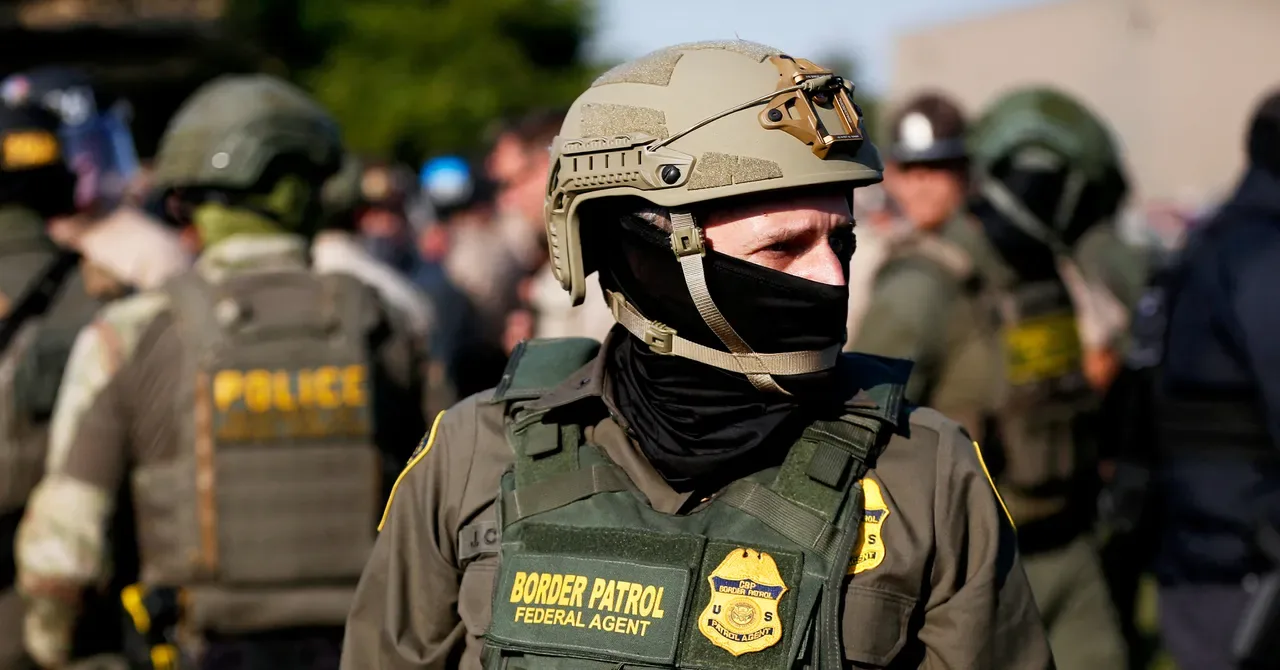
The U.S. Department of Homeland Security (DHS) is planning a new mobile surveillance system that integrates artificial intelligence, radar, high-powered cameras, and wireless networking into a single, autonomous platform. Federal contracting records reveal that this project, called the Modular Mobile Surveillance System (M2S2), would transform standard off-road vehicles into advanced mobile observation towers capable of patrolling and monitoring remote border regions.
A New Era of Mobile Border Surveillance
The proposed system appeared in a pre-solicitation notice quietly published by U.S. Customs and Border Protection (CBP). The notice includes early-stage technical documentation, data requirements, and system design goals.
DHS has not yet issued an official comment on the project.
If M2S2 performs as intended, border agents could deploy it within minutes. Vehicles would be parked, a telescoping mast would rise, and sensors would begin scanning several miles in every direction. The platform’s AI-powered “computer vision” would interpret visual data in real time—detecting motion, differentiating between people, animals, and vehicles, and tracking activity patterns using heat signatures and shape recognition.
The algorithms behind this system are derived from military drone technologies, trained on vast image datasets to enhance accuracy in complex environments such as deserts, forests, and mountain passes. By combining AI, radar, and real-time data sharing, DHS hopes to expand its border surveillance network far beyond today’s fixed monitoring stations.
Funding and Expansion Under the Trump Administration
Development of the M2S2 aligns with the Trump administration’s aggressive immigration enforcement strategy, which has significantly expanded DHS’s funding and authority. Under the administration’s “One Big Beautiful Bill,” Congress allocated over $160 billion toward immigration enforcement and border initiatives, with a major portion directed to DHS.
DHS’s discretionary budget authority rose to nearly $65 billion, marking a 65% increase—the largest in the department’s history. The funds are being used to enhance border technology, detention capacity, and large-scale surveillance programs such as M2S2.
Precision, Connectivity, and Data Retention
Documents reviewed by WIRED indicate that the M2S2 system will pinpoint the locations of detected objects within 250 feet, with a “stretch goal” of 50 feet accuracy. The data will be integrated into a tactical mapping app known as TAK (Team Awareness Kit)—a digital platform developed by the U.S. Department of Defense. TAK is designed to help operators visualize real-time movements, coordinate missions, and minimize operational risks such as friendly fire.
M2S2 will feature two modes of operation:
Agent-supervised mode, where a border patrol officer remains on-site.
Autonomous mode, in which the vehicle operates largely unattended, automatically scanning and transmitting alerts when movement is detected.
All mission data—including video, radar readings, and sensor logs—will be stored securely for at least 15 days, protected from deletion or alteration under any circumstances.
A Glimpse Into the Future of Surveillance
The Modular Mobile Surveillance System represents a major technological leap in how the United States monitors its borders. By merging artificial intelligence, advanced sensors, and mobile deployment, DHS aims to create a flexible surveillance network that can operate virtually anywhere.
While privacy advocates are expected to raise concerns about the potential misuse of autonomous monitoring systems, M2S2 underscores how AI-driven surveillance is quickly becoming a core component of national security infrastructure.
For more articles like this visit Trenzest.