
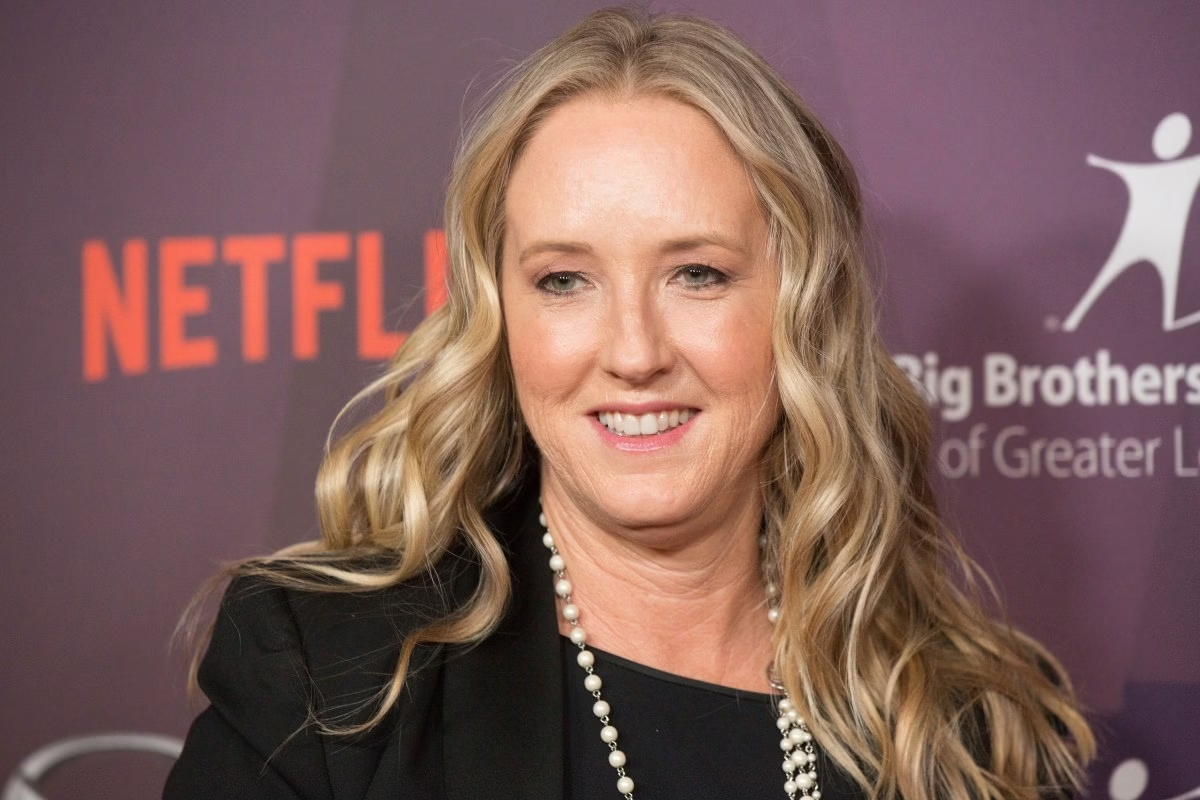
Amazon recently announced a significant change in its leadership structure that many industry observers believe reflects broader challenges within the company’s streaming strategy. This week, the streaming giant revealed that Jennifer Salke, who has been at the helm of Amazon MGM Studios, is stepping down from her role. Although Salke’s departure was described by her boss, Mike Hopkins—the head of both Amazon MGM Studios and Prime Video—as a decision that would “flatten our leadership structure a bit,” many see it as a clear indicator of mounting dissatisfaction with the direction of Amazon’s streaming endeavors over recent years.
For context, Jennifer Salke’s career at Amazon began in 2018 when the company was actively seeking to diversify its content portfolio. Coming from a background that included a notable stint at NBC, Salke was seen as the ideal candidate to help transition Amazon Studios from producing critically acclaimed niche films and shows into creating blockbuster hits that could capture mainstream audiences. Under her leadership, Amazon saw the release of several popular series and movies. Titles like “Reacher,” “Jack Ryan,” “Fallout,” and the widely discussed “The Boys” provided evidence of the company’s potential in the competitive streaming landscape.
Despite these successes, not all initiatives have met the high expectations set by the company’s ambitious strategies. One of the most talked-about projects during Salke’s tenure was “The Lord of the Rings: The Rings of Power.” The series, which premiered with record-breaking viewership numbers, was heralded as a monumental gamble by Amazon, given its astronomical production budget exceeding $1 billion. Yet, despite the initial fanfare and strong debut, the show has not evolved into the global phenomenon that investors and audiences were hoping for. The gap between initial expectations and sustained performance has raised questions about the long-term viability of such mega-budget projects within Amazon’s streaming framework.
Another project that has come under scrutiny is “Citadel,” an espionage thriller that was envisioned as the cornerstone of a sprawling fictional universe. The show was designed to serve as a launchpad for multiple spin-offs, including titles like “Citadel: Diana” and “Citadel: Honey Bunny.” However, the journey of “Citadel” has been rocky. Extensive reshoots pushed its production costs to astronomical levels, reportedly making it the second most expensive show ever produced—trailing only “The Rings of Power.” Despite these investments, the show’s reception has been mixed, leading to significant delays for its second season. Originally slated for a fall 2025 release, the new target has now been shifted to spring 2026, with additional spin-offs currently on hold.
The challenges faced by Amazon in its streaming ventures extend beyond the performance of its flagship series. The company has also encountered setbacks in its attempts to integrate more traditional, established film franchises into its expanding entertainment portfolio. A prime example of this is the well-known James Bond franchise. Following its acquisition of MGM in 2022, Amazon attempted to secure a new Bond film. However, the production has hit multiple roadblocks. The producers, Michael Wilson and Barbara Broccoli, who inherited creative control from the legendary Bond producer Albert “Cubby” Broccoli, expressed their dissatisfaction with Amazon’s approach early on. Reports suggest that tensions escalated when Salke allegedly referred to James Bond merely as “content” during an initial meeting, a comment that did not sit well with the franchise’s custodians. In one particularly memorable instance, Barbara Broccoli was rumored to have described Amazon’s team with a dismissive term, sparking further controversy.
The fallout from this incident reached the highest levels of Amazon’s corporate hierarchy. According to reports from The Wall Street Journal, the reaction from Amazon founder Jeff Bezos was swift and uncompromising. Infuriated by the negative portrayal of the company in the context of the Bond negotiations, Bezos is said to have issued a directive to remove the troublesome figure from the equation, reportedly stating, “I don’t care what it takes, get rid of her.” The situation culminated in a substantial payout to Michael Wilson and Barbara Broccoli, effectively buying back control of the franchise and marking a rare public admission of internal discord within Amazon’s entertainment division.
Amid these challenges, Salke’s departure appears to be part of a broader restructuring effort. Rather than seeking a direct replacement for her position, Amazon has decided to reorganize its reporting structure. Now, the heads of Amazon’s film and TV studios will report directly to Mike Hopkins. This move is indicative of the company’s desire to streamline decision-making processes, a trend that has been observed across several tech companies in recent years, particularly in the wake of multiple rounds of layoffs and cost-cutting initiatives.
For Jennifer Salke, the decision to step down is not the end of her career. Sources indicate that she is preparing to launch her own film and TV production company. The new venture is set to strike a first-look deal with Amazon, ensuring that despite her departure, her creative talents and industry insights remain within the Amazon ecosystem to some extent. This development highlights a recurring theme in today’s entertainment landscape: even when executives leave high-profile roles, their established relationships and track records often secure them continued influence and opportunities in the industry.
The reorganization at Amazon comes at a time when the streaming market is more competitive than ever. Industry giants are constantly recalibrating their strategies to capture the elusive balance between quality content and broad audience appeal. Amazon’s recent strategic shifts suggest that the company is not only responding to external market pressures but also grappling with internal challenges related to content development and leadership management.
Observers note that the restructuring might help alleviate some of the issues Amazon has faced in executing its ambitious streaming projects. By consolidating leadership and potentially reducing internal redundancies, the company hopes to foster a more agile and responsive creative environment. However, critics caution that the success of this approach remains to be seen. The streaming world is notoriously unpredictable, and even well-intentioned leadership changes can take time to yield tangible results.
In summary, the departure of Jennifer Salke from Amazon MGM Studios is emblematic of larger strategic recalibrations within Amazon’s streaming division. While her exit is officially framed as an opportunity to streamline the leadership structure, it also brings into sharp relief the various challenges that have plagued the company’s streaming initiatives. From the underwhelming performance of high-budget projects like “The Rings of Power” and “Citadel” to the contentious negotiations over the James Bond franchise, Amazon is clearly in a period of introspection and transformation. As the company continues to adapt its approach in the fast-evolving entertainment industry, all eyes will be on how these changes affect its ability to compete with other streaming giants in the coming years.