
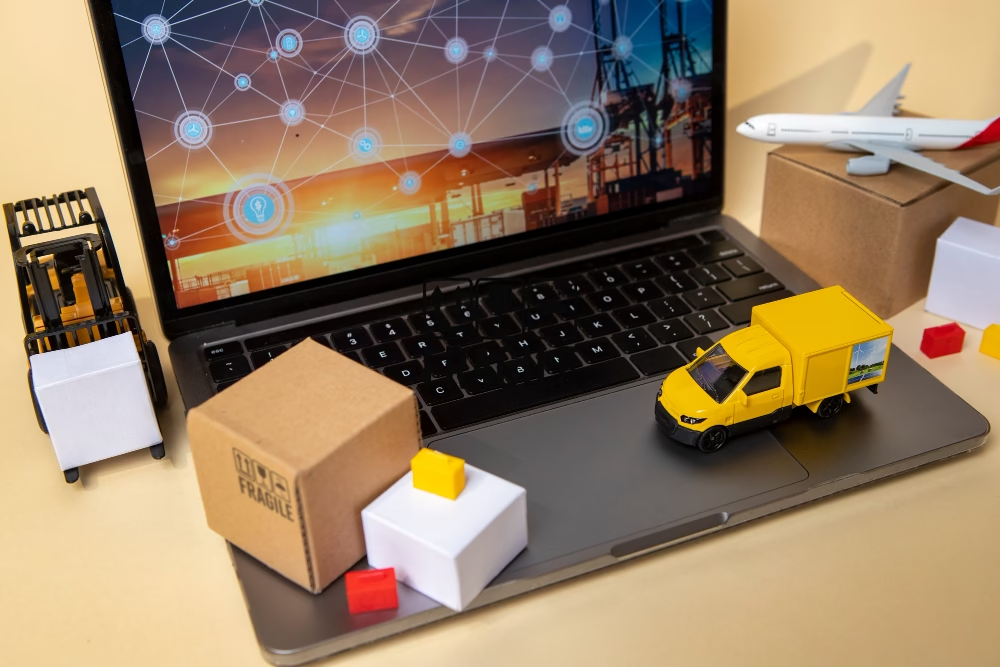
“The best supply chains aren’t just fast and cost-effective—they’re intelligent.”
Artificial intelligence (AI) is no longer a buzzword reserved for sci-fi movies or high-level research labs. It’s now embedded in the very fabric of how businesses operate—especially in supply chain management (SCM). For tech enthusiasts, developers, and innovation-driven professionals, understanding how AI is reshaping logistics is both fascinating and essential.
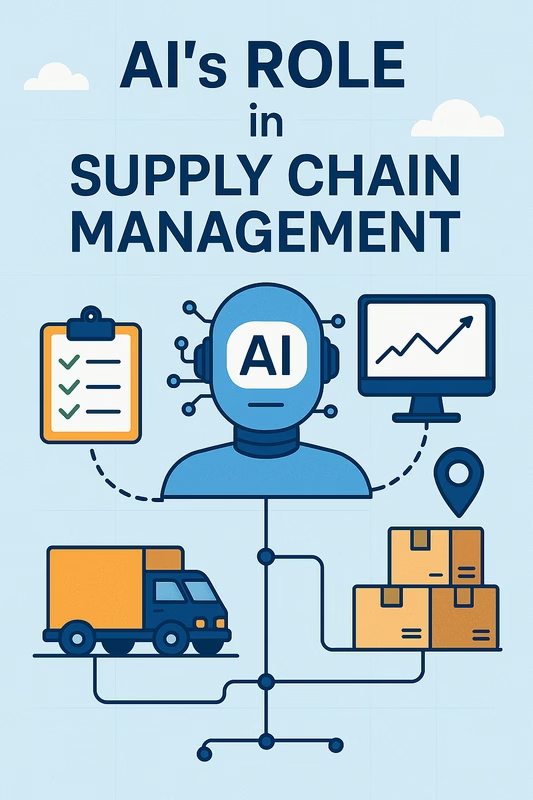
From demand forecasting to autonomous warehousing, AI is revolutionizing every link in the chain. But what exactly does that look like in action? And how can today’s creators and technologists get ahead of the curve?
Let’s dive in.
Table of Contents
- The State of Supply Chains Today
- How AI is Transforming Supply Chain Management
- Key Technologies Powering AI in SCM
- Real-World Applications and Case Studies
- Challenges and Considerations
- The Future of AI in Supply Chains
- Final Thoughts: What It Means for Innovators
The State of Supply Chains Today
Supply chains have always been complex—but the pandemic, geopolitical disruptions, and shifting consumer behaviors have exposed their vulnerabilities. In today’s globalized economy, supply chains must be:
- Agile
- Transparent
- Resilient
- Customer-focused
Legacy systems, manual operations, and siloed data simply can’t keep up anymore. Enter AI.
How AI is Transforming Supply Chain Management
AI isn’t just an add-on—it’s becoming the brain of modern supply chains. Here’s how:
1. Predictive Demand Forecasting
AI algorithms can analyze historical sales, seasonal trends, and external factors (weather, news, social media sentiment) to forecast demand with high precision.
Why it matters:
Better forecasting = less overstock, fewer stockouts, and happier customers.
2. Intelligent Inventory Management
AI-powered platforms like Llamasoft (now part of Coupa) optimize stock levels across multiple warehouses using real-time data and predictive analytics.
Example:
Amazon uses machine learning models to anticipate which products will be ordered and ships them to nearby hubs before customers even click “Buy Now.”
3. Route Optimization & Autonomous Logistics
AI and machine learning optimize delivery routes to reduce fuel costs and delivery times. Combine this with autonomous delivery via drones or self-driving trucks, and you’ve got a powerful logistics engine.
Notable Tools:
- Nuro: Autonomous vehicles for last-mile delivery
- Google’s OR-Tools: Open-source optimization toolkit used in logistics planning
4. Supply Chain Risk Management
Natural disasters, cyberattacks, or political shifts? AI can help detect and respond to potential disruptions using risk modeling and real-time alerts.
Key Technologies Powering AI in SCM
Behind the scenes, several modern technologies work in concert to make AI in supply chains a reality:
- Machine Learning (ML): Pattern recognition for forecasting and anomaly detection
- IoT Sensors: Real-time visibility into inventory, temperature, location, and equipment health
- Robotic Process Automation (RPA): Streamlining repetitive logistics and administrative tasks
- Blockchain & Web3: Enhancing transparency and traceability across suppliers
- Cloud Computing: Scalable data infrastructure for AI models (e.g., AWS, Azure, Google Cloud)
Real-World Applications and Case Studies
🏭 Siemens
Siemens uses AI to predict equipment failure in factories before it happens, minimizing downtime and improving overall efficiency.
📦 DHL
Through AI-based analytics and digital twins, DHL enhances warehouse layout, boosts picking efficiency, and simulates new logistics strategies.
🛒 Walmart
Using AI and automation, Walmart’s supply chain reacts in near real-time to customer demand across its 10,500+ stores globally.
Challenges and Considerations
Of course, integrating AI isn’t all smooth sailing. Innovators and developers should keep these challenges in mind:
- Data Silos: Many companies still struggle to centralize supply chain data
- Implementation Costs: AI adoption often requires infrastructure upgrades and training
- Ethics & Transparency: AI decisions in sourcing or routing must be explainable and fair
- Cybersecurity: More connected systems = more vulnerability points
The key is to adopt incrementally, testing use cases and scaling based on ROI.
The Future of AI in Supply Chains
Looking ahead, expect to see:
- Hyper-Automation: AI + IoT + RPA = fully autonomous supply networks
- Sustainable Logistics: AI optimizing for carbon reduction, not just speed
- Self-Healing Systems: AI that can automatically adjust supply plans when disruptions occur
- Decentralized Supply Chains: Web3 and blockchain enabling peer-to-peer logistics and smart contracts
These trends aren’t five years away—they’re already unfolding.
Final Thoughts: What It Means for Innovators
If you’re a tech creator, developer, or entrepreneur, now’s the time to:
✅ Experiment with AI tools and APIs for logistics
✅ Explore open-source projects like OR-Tools or TensorFlow for SCM solutions
✅ Think beyond just coding—consider business impact, UX, and scalability
✅ Stay ahead by subscribing to industry-leading platforms like Trenzest.com, where we decode AI, automation, and Web3 for forward-thinking professionals
Got insights or questions on AI in supply chains? Drop a comment, share this post, or explore more at Trenzest. Let’s shape the future of logistics together.


One thought on “AI’s Role in Supply Chain Management: Transforming the Future of Logistics”