Introduction
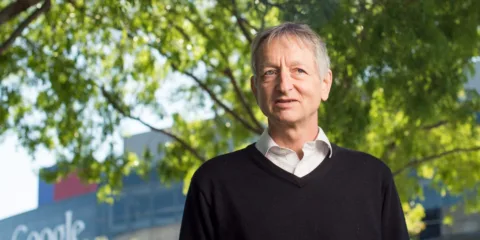
As artificial intelligence continues to redefine our digital landscape, the race to develop and deploy transformative AI technologies has intensified. But beneath the speed and scale lies a growing tension between innovation and safety. In a recent episode of The Diary of a CEO podcast, Geoffrey Hinton—widely known as the “Godfather of AI”—shared revealing insights into this balance, particularly in comparing OpenAI and Google’s diverging strategies.
This article dives deep into Hinton’s commentary and what it reveals about the evolving AI arms race, highlighting valuable lessons for tech professionals, startups, and businesses navigating the rapidly shifting terrain.
The Godfather of AI Speaks Out
Geoffrey Hinton, a pioneer of neural networks and former Google executive, has never been shy about voicing his concerns over artificial intelligence. His appearance on the Diary of a CEO podcast (aired June 16, 2025) emphasized a critical point: reputation management played a pivotal role in how major players responded to the AI revolution.
“Google didn’t release their chatbot immediately because they were worried about their reputation,” Hinton explained. “They had a very good reputation and didn’t want to damage it.”
OpenAI vs. Google: Reputation vs. Risk
In stark contrast, OpenAI surged ahead in the AI race, releasing ChatGPT in late 2022. With little brand baggage and everything to gain, OpenAI was willing to take calculated risks that larger, established companies like Google hesitated to make.
“OpenAI didn’t have a reputation, so they could afford to take the gamble,” said Hinton.
This bold move helped OpenAI secure a first-mover advantage, catapulting the company into global headlines and setting a new standard for AI interaction—one that competitors like Google struggled to match in time.
A Slow Start for Google’s Bard and the Rise of Gemini
Google eventually released its own chatbot, Bard, in March 2023. However, the delay—rooted in internal debates about reputational risk and cautious governance—meant they were already playing catch-up.
Later, Bard was folded into Google’s Gemini, a more comprehensive suite of large language models. Despite its scale, Gemini encountered several stumbling blocks, from biased image generation to controversial outputs, prompting Google CEO Sundar Pichai to admit, “We got it wrong.”
To its credit, Google has since committed to refining Gemini’s safety and fairness—a testament to its long-term brand-centric philosophy, but also a reminder of the growing pains that come with AI innovation.
Geoffrey Hinton’s Departure and Reflections on AI Safety
Hinton eventually left Google to speak more freely about the dangers of AI, particularly autonomous or agentic systems that could spiral beyond human control. However, he clarified that he wasn’t silenced at Google.
“They encouraged me to work on AI safety and said I could say what I liked,” Hinton noted. “But when you work for a big company, you tend to censor yourself.”
Despite his departure, Hinton affirmed that Google acted responsibly. OpenAI, on the other hand, remains a question mark in his view—particularly regarding its leadership and long-term intentions.
OpenAI’s Evolving Approach to Safety
OpenAI’s stance on safety has shifted in recent months. A recent blog post by the company acknowledged the need to reassess safety rules only when changes don’t “meaningfully increase the overall risk of severe harm.”
CEO Sam Altman, speaking at TED2025, emphasized that OpenAI is using a “preparedness framework” to identify and manage dangerous turning points in AI development. He also admitted to loosening some behavioral restrictions based on user feedback over censorship concerns.
However, critics argue that OpenAI is now more lenient than it once was, raising new ethical and regulatory questions.
Lessons for Tech Leaders, Entrepreneurs, and Marketers
Whether you’re building a tech startup or integrating AI tools into your marketing strategy, the ongoing debate between speed vs. safety offers crucial takeaways:
Startups like OpenAI can use agility and lack of legacy risk to their advantage—but must not neglect long-term accountability.
Corporations like Google often move cautiously to preserve trust—an asset just as valuable as cutting-edge tech.
Entrepreneurs and marketers should remain agile but responsible, understanding that in AI, trust is as important as innovation.
These dynamics aren’t limited to Silicon Valley—they affect how we all approach AI in content creation, automation, customer engagement, and analytics.
Trenzest’s Take: Building Responsibly in the Age of AI
At Trenzest, we advocate for an approach that blends innovation with integrity. As we help startups and marketers integrate AI into their strategies, we emphasize the importance of staying current while building trust with audiences.
Want to explore how to ethically and effectively implement AI in your business? Read more on our blog or get in touch with us to discover tailored solutions that drive growth responsibly.
We believe that long-term success is built not just on being first—but being right.
Conclusion
The AI race is more than a contest of speed—it’s a test of vision, responsibility, and ethics. Geoffrey Hinton’s insights offer a behind-the-scenes look at how leaders think through these challenges. Whether you side with OpenAI’s bold moves or Google’s caution, the message is clear: how we build matters just as much as what we build.
As AI continues to evolve, staying informed and intentional will be the defining traits of successful businesses. And at Trenzest, we’re committed to helping you lead the way.