
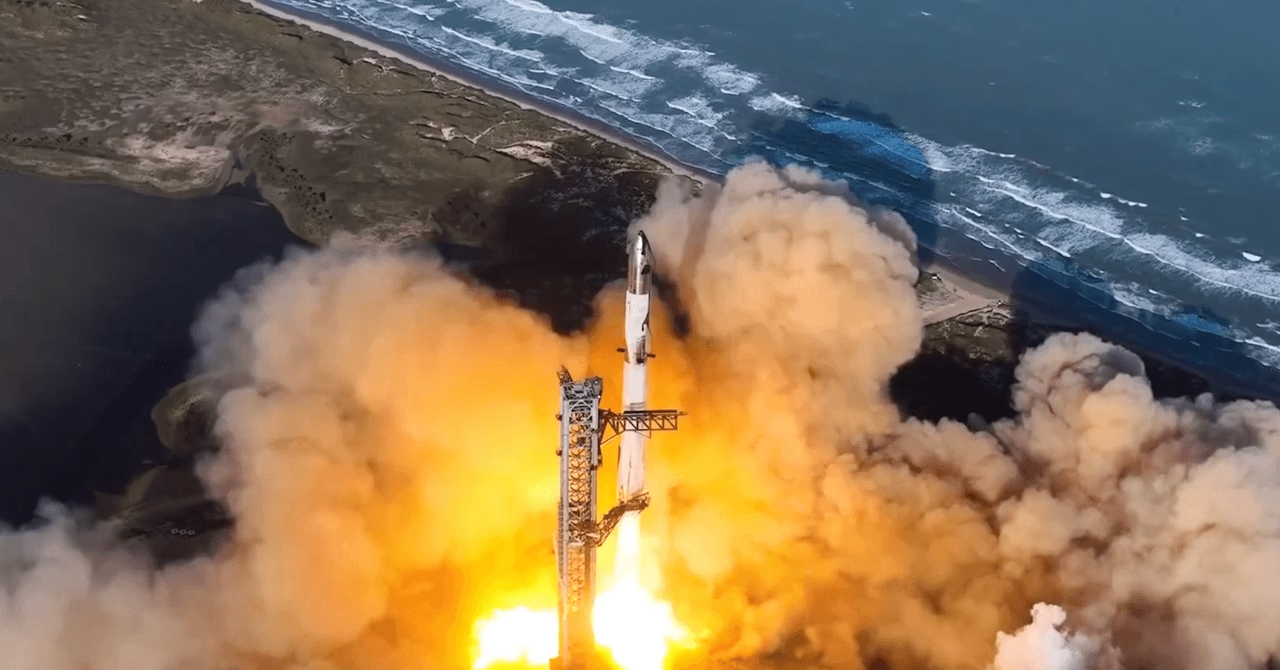
1. Introduction: SpaceX’s Ambitious Starship Program
SpaceX, led by Elon Musk, has made significant strides toward revolutionizing space exploration with its Starship program. While the program’s upper stage—known simply as “the ship”—has faced challenges, recent developments with the Super Heavy booster signal impressive progress. As engineers work diligently to resolve issues with the upper stage, the success of the Super Heavy booster is a major step forward.
In this article, we’ll explore the remarkable advancements SpaceX has made with the Super Heavy booster, the technical hurdles involved, and the implications of this progress for the future of space travel. For more on how SpaceX continues to innovate, visit Trenzest.
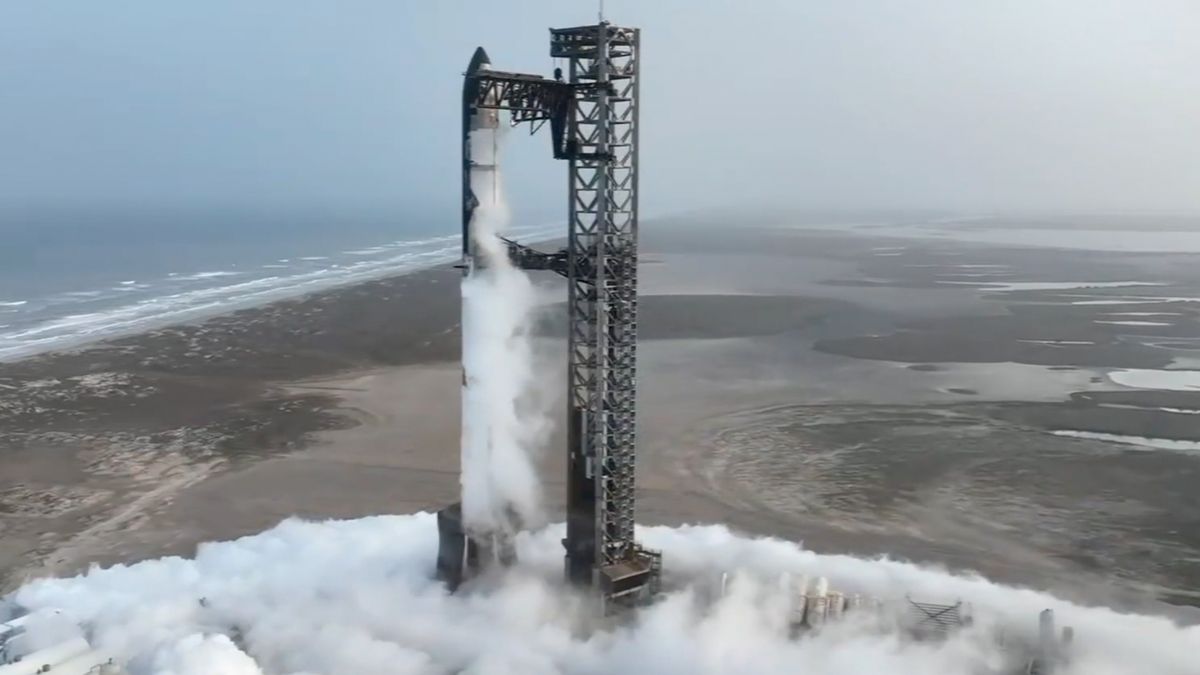
2. Super Heavy Booster: A Game-Changer in Rocketry
The Super Heavy booster is a pivotal component of SpaceX’s Starship rocket system. Standing at an impressive height of 404 feet (123.1 meters), it is one of the largest and most powerful rocket boosters ever built. With 33 methane-fueled Raptor engines capable of generating nearly 17 million pounds of thrust, Super Heavy has double the power of NASA’s iconic Saturn V rocket.
Its sheer size and engine power make it a cornerstone of SpaceX’s mission to send humans to Mars and beyond. A successful reflight of this booster would mark a key milestone in SpaceX’s long-term goal of achieving zero-touch reflight, where rockets are reusable with minimal refurbishment.
3. Challenges and Progress: The Path to Reusability
While the Super Heavy booster has made great progress, the road to reusability has not been without challenges. SpaceX’s team faced back-to-back failures with the upper stage of Starship, which hindered the program’s advancement. However, the recent test of Booster 14, which previously launched in January, marks a significant achievement.
During this test, SpaceX successfully fired the booster for approximately eight seconds, showcasing the reusability of its engines. This test-fired booster is now closer to flight readiness than any other in SpaceX’s factory, demonstrating the company’s ability to recover and reuse components effectively.
4. The Technology Behind the Super Heavy Booster
The Super Heavy booster is a marvel of engineering, incorporating technology developed from SpaceX’s previous rockets, particularly the Falcon 9. Lessons learned from Falcon 9’s reusable rockets have informed the design of Super Heavy, making it easier to transport, refurbish, and re-launch.
The primary challenge SpaceX faces with the Super Heavy booster lies in its size and the complexity of the engines. The design features 33 engines, a significant improvement over previous boosters, allowing for more control and efficiency in powering the Starship system.
This integration of advanced technologies and previous lessons learned from the Falcon 9 program has positioned SpaceX to achieve reusability milestones faster than anticipated. For further insights on SpaceX’s technological breakthroughs, explore Trenzest’s Aerospace Innovations.
5. SpaceX’s Experience with Rocket Reusability
SpaceX has a long history of success with rocket reusability, primarily with the Falcon 9 booster. Since the first successful reflight of a Falcon 9 booster in 2017, SpaceX has demonstrated its ability to refurbish and reuse rockets for multiple missions.
This experience has provided SpaceX with invaluable data, enabling the company to refine its methods for rocket recovery, refurbishment, and reflight. For example, after each Falcon 9 reflight, the company meticulously inspects and tests the rocket to ensure it meets the required standards for safe operation.
With this wealth of knowledge, SpaceX is now able to apply the same principles to the Super Heavy booster, which will likely lead to faster reusability cycles and reduced launch costs in the future.
6. The Future of SpaceX and Starship’s Upper Stage
Despite the significant progress made with the Super Heavy booster, engineers are still working through challenges with Starship’s upper stage. However, SpaceX is optimistic that these issues will be resolved soon, paving the way for the Starship rocket to complete its mission of interplanetary travel.
The successful reflight of the Super Heavy booster is a crucial step in SpaceX’s plan to make the entire Starship system fully reusable. Once both stages of Starship achieve reusability, SpaceX could revolutionize space travel, making it more cost-effective and accessible.
At Trenzest, we closely follow the developments in space exploration and encourage entrepreneurs and tech enthusiasts to keep an eye on how these innovations may impact various industries. Learn more about the future of space exploration at Trenzest.
7. Conclusion: What’s Next for SpaceX and Starship
The recent test-fire of SpaceX’s Super Heavy booster marks a significant step in the company’s mission to create a fully reusable rocket system. As engineers continue to address challenges with Starship’s upper stage, the successful reflight of the Super Heavy booster brings SpaceX one step closer to making space travel a regular, affordable venture.
For entrepreneurs, marketers, and tech enthusiasts, the developments in the Starship program provide key lessons in innovation, problem-solving, and the importance of reusability in technology. As SpaceX moves forward, the potential applications for these technologies in various industries will continue to grow, shaping the future of aerospace.
To stay updated on SpaceX’s developments and how they could influence business strategies and technological advancements, be sure to follow Trenzest for more insights.