
Introduction: A Battle of Titans
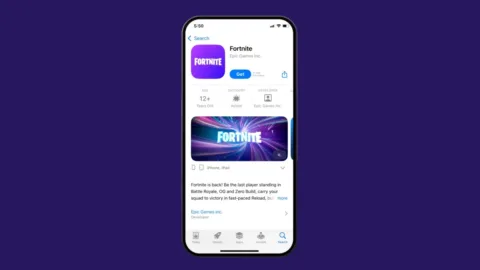
In a long-awaited turn of events, Fortnite—Epic Games’ blockbuster battle royale game—is officially making its return to the iOS App Store in the U.S. This development comes after nearly five years of legal wrangling between Epic Games and Apple, a battle that could redefine how developers monetize apps and interact with users on mobile platforms.

Background: The Origins of the Epic vs. Apple Dispute
The legal conflict began in 2020 when Epic Games implemented a direct payment system within Fortnite, sidestepping Apple’s mandatory 30% commission on in-app purchases. Apple responded swiftly by removing Fortnite from the iOS App Store, igniting a high-profile legal feud over digital marketplace monopolies, user rights, and the cost of doing business in the mobile app economy.
The 2021 Ruling: A Partial Victory
In 2021, U.S. District Judge Yvonne Gonzalez Rogers ruled that Apple could not prohibit developers from including external links or buttons that directed users to alternative payment methods outside the App Store. While this was seen as a small win for developers, it did not result in Fortnite’s immediate return. Tim Sweeney, CEO of Epic Games, emphasized that the game would only return to iOS once fair competition with Apple’s payment system was possible.
“Fortnite will return when it can offer in-app payment in fair competition with Apple in-app payment, passing along the savings to consumers.” – Tim Sweeney, 2021
The Turning Point: Judge Rogers’ 2025 Ruling
Fast forward to April 30, 2025. In a bold and decisive move, Judge Rogers ruled that Apple was in “willful violation” of the original injunction. She criticized Apple for continuing practices that undermined developers’ ability to use alternative payment methods.
“That it thought this Court would tolerate such insubordination was a gross miscalculation. As always, the coverup made it worse.” – Judge Yvonne Gonzalez Rogers
The ruling declared Apple’s 15–30% fees “unlawful” in the U.S., aligning it with regulatory standards already set in Europe under the Digital Markets Act (DMA). This not only vindicated Epic but also sent shockwaves through the app ecosystem.
The Bigger Picture: How This Affects Developers
This decision has far-reaching implications. Developers will now be able to implement alternative payment gateways in their iOS apps without fearing removal or retaliation from Apple. This opens up opportunities for:
Increased profit margins
Transparent pricing models
Greater control over customer relationships
It also marks a shift toward a more open and developer-friendly app economy—an issue Trenzest has long advocated for in our technology insights blog.
Fortnite’s Comeback: What to Expect
With legal obstacles now cleared, Tim Sweeney confirmed that Fortnite would finally return to iOS devices in the U.S. While the exact launch date hasn’t been disclosed, expectations are high that the game will include updated payment options, potentially offering users discounted prices compared to previous versions.
“NO FEES on web transactions. Game over for the Apple Tax.” – Tim Sweeney, April 2025
Fans can look forward to new content, cross-platform play, and direct savings from in-app purchases—all without the overhead of Apple’s transaction fees.
Implications for App Monetization Models
The end of Apple’s “tax” reshapes the dynamics of app monetization. Entrepreneurs and startups can now:
Offer freemium models with less dependency on high commission fees
Launch subscription-based services without losing a third of the revenue
Improve user retention by reinvesting savings into user experience and content
These changes could fuel innovation, especially in gaming, edtech, fintech, and digital services—sectors that rely heavily on mobile apps for growth.
What This Means for You as a Developer or Entrepreneur
For developers, marketers, and tech-savvy entrepreneurs, this ruling signals a new era of digital opportunity. Whether you’re building the next indie hit or a mobile-first business platform, the barrier to entry just got lower.
At Trenzest, we help businesses like yours stay ahead by adapting to evolving digital landscapes. Our curated guides on growth automation and app monetization strategies are designed to help you make the most of this industry shift.
Trenzest Insight: Adapting to a Fairer App Economy
Trenzest recognizes this pivotal moment as a prime opportunity for small businesses and indie developers. With fairer rules and fewer platform restrictions, it’s now more feasible than ever to launch and scale mobile applications. If you’re exploring new revenue streams or looking to enhance your digital product strategy, now is the time.
We offer actionable insights, tools, and guidance through our blog and resources to help you build sustainable digital businesses. To explore how you can benefit, visit Trenzest.com.
Conclusion: A Landmark Win for Open Market Competition
Epic Games’ victory is not just about one game—it’s about leveling the playing field for millions of developers worldwide. As Fortnite reclaims its spot on the iOS App Store, it symbolizes the dawn of a more open, equitable digital marketplace.
Whether you’re a gamer, developer, or digital strategist, this moment serves as a powerful reminder: fair competition drives innovation—and the future of mobile platforms just got a lot brighter.