
Introduction
In an era where artificial intelligence (AI) is transforming industries and global economies, the United States risks losing its edge—not due to a lack of innovation, but because of immigration policies that threaten its international student pipeline. Recent visa terminations and policy shifts have raised concerns within academic and tech communities alike, as bright minds are being forced to leave the very country they hoped to help shape.
The Case of the AI Doctoral Student
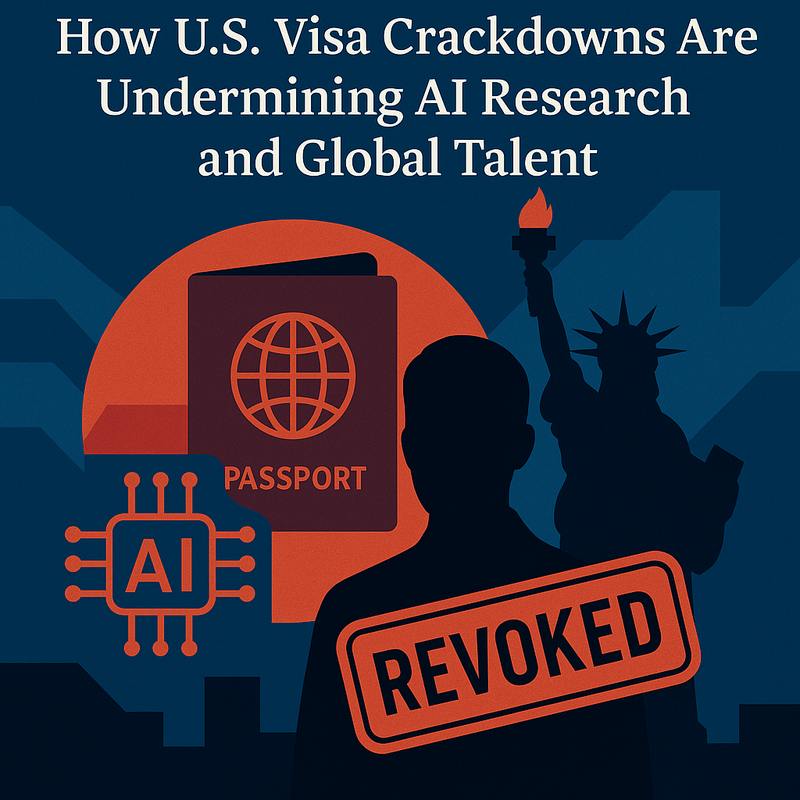
A doctoral student in California, specializing in artificial intelligence, recently faced a sudden and devastating challenge—the termination of their SEVIS record, a critical digital document confirming legal visa status. Without it, their right to stay in the U.S. is in jeopardy.
Despite having no criminal history and studying in the U.S. for nearly a decade, the student was flagged during a criminal records check. The student believes the issue may stem from a dated police interaction unrelated to criminal activity. This abrupt disruption jeopardizes not only their academic progress but also their contributions to ongoing research in AI.
The Larger Immigration Crackdown
This case is not isolated. Over the past few months, more than a thousand international students across the United States have had their visa statuses questioned or revoked. This wave of enforcement, rooted in policy changes initiated during the Trump administration, appears to persist—even in cases involving students with impeccable academic and legal records.
Many universities remain unaware of these federal actions until students receive direct notifications, often with little warning or recourse. This lack of transparency leaves both institutions and students in a precarious position.
Impact on Research and Innovation
Dr. Yisong Yue, a machine learning professor at Caltech, expressed concern about the broader implications of this crackdown:
“Because research is highly specialized, when a doctoral student is pulled from a project, it can set back the project by months or years.”
In fields like AI, continuity and domain expertise are crucial. Disrupting this ecosystem not only stalls innovation but also deters future talent from choosing the U.S. as their academic and professional destination.
Errors in the System: AI and Administrative Mistakes
Beyond the policy itself, execution errors have exacerbated the situation. One notable case involves Suguru Onda, a computer science Ph.D. candidate at Brigham Young University. His visa was reinstated without explanation after his attorney filed a lawsuit. According to immigration attorney Adam Crayk, these issues may stem from AI-driven visa screenings being conducted without sufficient human oversight.
This raises broader questions about the ethical use of AI in governance—a topic we explore further on Trenzest.
Legal Action and Temporary Relief
In a positive development, a federal judge in Georgia recently issued a temporary restraining order on behalf of approximately 100 affected international students. The ruling mandated that their legal statuses be reinstated. While this offers a sliver of hope, the broader student population remains vulnerable, and the ruling is subject to appeal.
Why International Talent Matters
International students are not just visitors; they are economic drivers and innovation catalysts. According to a recent NAFSA report, foreign students contributed $43.8 billion to the U.S. economy during the 2023–2024 academic year and supported over 378,000 jobs.
From co-founding OpenAI to inventing core AI technologies like the transformer model—used in today’s most advanced chatbots—immigrants have consistently pushed the boundaries of what’s possible in tech.
Implications for the Future of U.S. Tech
As AI continues to reshape global industries, the U.S. cannot afford to alienate the very individuals who fuel its tech dominance. The cumulative impact of restrictive immigration policies, bureaucratic missteps, and unvetted AI systems may result in a talent drain that shifts innovation to more welcoming countries.
This is a concern echoed by researchers at companies like OpenAI, Google, and universities worldwide. If left unaddressed, these issues could have long-term consequences for America’s position in the global tech landscape.
Conclusion and Next Steps
The current immigration climate is creating an atmosphere of uncertainty for international students—many of whom have dedicated years to research and innovation in the U.S. While some legal wins offer temporary relief, systemic reform is needed to preserve America’s reputation as a haven for global talent.
At Trenzest, we advocate for responsible innovation and policies that empower the next generation of technologists. If you’re a tech founder, educator, or policymaker interested in supporting ethical AI and global collaboration, we encourage you to explore our AI Policy Insights and subscribe to our newsletter for updates.
Ready to be part of the conversation? Contact us to learn more or share your story.