The Humble Beginnings of a Visionary
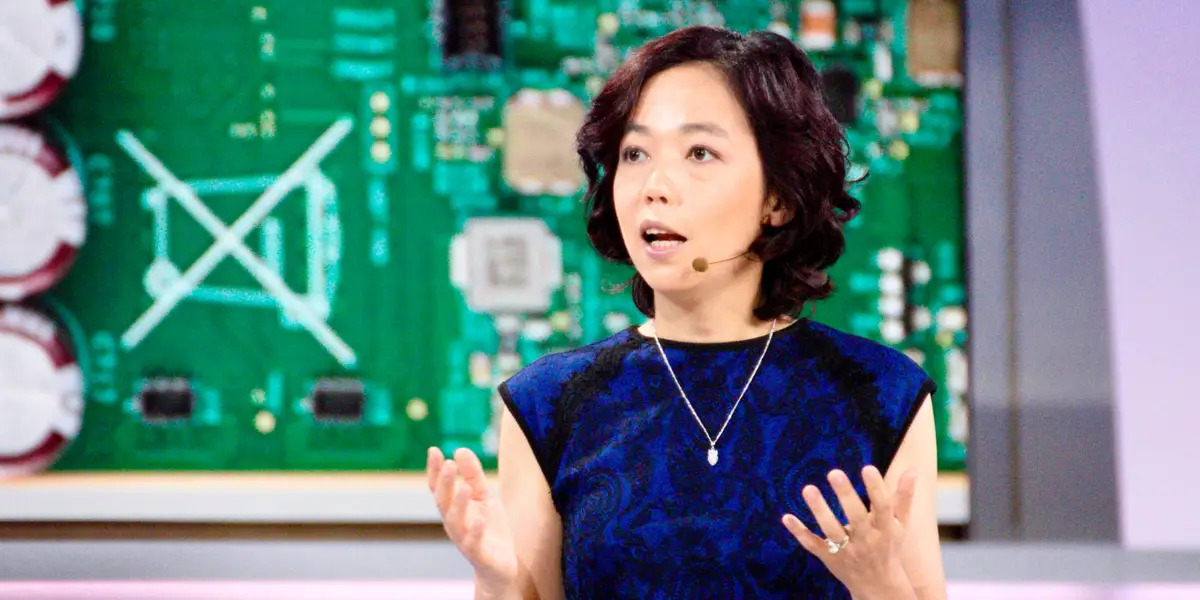
Every tech pioneer has an origin story, and Fei-Fei Li—widely known as the “Godmother of AI”—is no exception. Before leading groundbreaking advances in computer vision and helping shape the next wave of artificial intelligence, Li’s path began far from Silicon Valley. At age 15, she immigrated from China to the United States with her family, settling in Parsippany, New Jersey. To make ends meet, the family opened a small dry-cleaning business, a venture that would become central to Li’s early life and personal growth.
In a recent interview with Bloomberg, Li reflected on the difficult years her family faced. “We were not financially very well off at all. My parents were doing cashier jobs and I was doing Chinese restaurant jobs,” she said. Running the dry-cleaning shop was a necessity for survival—and, as it turned out, a defining experience.
Running a Business While Building a Future
Li fondly jokes that she served as the shop’s unofficial “CEO.” Beginning at age 18, she managed the business for seven years, continuing even as she pursued higher education. While studying at Princeton University, she stayed close enough to support her parents. Later, while earning her Ph.D. at Caltech in California, she managed the shop remotely.
Because she was the family member most fluent in English, Li took responsibility for all operational logistics—phone calls, billing, inspections, and customer communication. “I was the one who spoke English,” she recalled. “So I took all the customer phone calls, I dealt with the billing, the inspections, all the business.”
This hands-on management experience strengthened her resilience—a trait she now credits as essential to both science and entrepreneurship.
Resilience as a Scientific Superpower
Li emphasizes resilience as the thread connecting her personal journey, academic contributions, and entrepreneurial ambitions. “As a scientist, you have to be resilient because science is a non-linear journey,” she said. “Nobody has all the solutions. You have to go through such a challenge to find an answer. And as an immigrant, you learn to be resilient.”
Her ability to persist through uncertainty helped shape her most influential academic achievement: ImageNet. This massive dataset of labeled images catalyzed modern computer vision breakthroughs and laid the foundation for today’s AI revolution.
Building the Next Era of Intelligence at World Labs
Now a Stanford professor and globally recognized leader in AI research, Li has embarked on a new chapter as the founder of World Labs, a one-year-old AI startup already valued at more than $1 billion.
The company is focused on developing world models—AI systems that go beyond language understanding to grasp spatial, physical, and visual context. Li describes spatial intelligence as “the ability for AI to understand, perceive, reason and interact with the world.” She sees world models as a natural extension of her lifelong work in visual intelligence.
Many AI researchers agree that world models could drive the next major leap in AI development, moving beyond the limitations of language-only systems. Even leaders like Meta’s Chief AI Scientist Yann LeCun, who recently announced his own world-model startup, share this vision.
Curiosity as the Constant Through-Line
Through every stage of her life—from immigrant teenager helping run a dry-cleaning shop to pioneering scientist—Li’s curiosity has remained constant. “I was always a curious kid,” she said. “My curiosity had an outlet, which was science—and that really grounded me.”
For more articles like this visit Trenzest.