
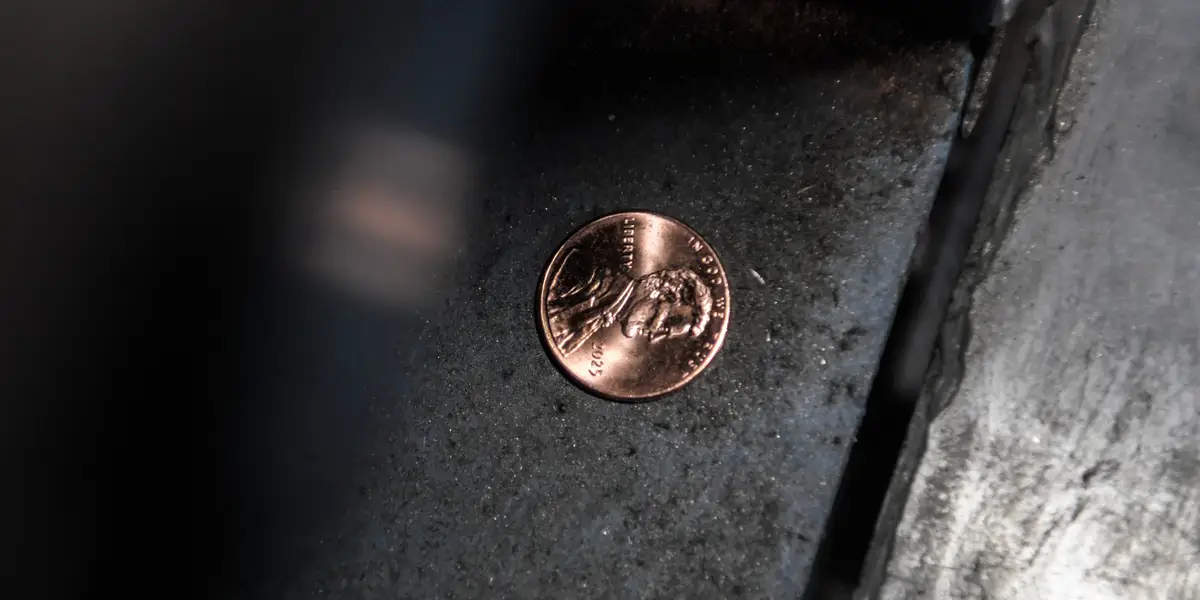
A Farewell to America’s Smallest Coin
The U.S. penny, first minted in 1793, has officially been retired. On Wednesday, the U.S. Treasury announced the minting of its final one-cent coin — marking the end of a 232-year era.
For generations, the penny has jingled in pockets, filled piggy banks, and been left behind on convenience store counters. But sentiment aside, its demise was inevitable. The penny had become a financial burden, a logistical nuisance, and an economic relic.
Let’s break down why the penny’s death was not just expected — but necessary.
The Penny Was Shockingly Expensive to Make
Once upon a time, the penny was made of copper — a metal that symbolized durability and value. But as copper prices rose, the U.S. Mint switched to zinc in 1982 to cut costs. Unfortunately, even that didn’t help much.
According to the U.S. Mint’s 2024 report, each penny costs 3.69 cents to produce — more than triple its face value. A decade ago, the cost was only 1.42 cents. That steady climb has been draining taxpayer dollars year after year.
In fact, the Mint estimates that eliminating the penny will save roughly $56 million annually. That’s $56 million that can be redirected to more productive government programs instead of literally being minted into loss.
As charming as the coin may be, it simply no longer made financial sense to keep producing it.
The Penny Lost Its Purpose in Modern Economy
Beyond the costs, the penny’s practical use had plummeted. Inflation has steadily eroded its buying power. What a penny could once buy in the 20th century now requires dozens, if not hundreds, of them.
To put it into perspective, imagine trying to buy a pair of sneakers priced at $1,100 using pennies — you’d need 110,000 coins. Even a modest $17 lunch would require 1,700 pennies, weighing nearly nine pounds — roughly as heavy as a newborn baby.
Simply put, the penny had become more of a hassle than a help. It slowed transactions, cluttered wallets, and filled jars that no one ever bothered to cash in.
A Push from the White House — and Applause from Economists
The final push to kill the penny came from the Department of Government Efficiency, part of the current White House administration’s broader effort to reduce wasteful spending. When the department targeted the penny earlier this year, supporters of fiscal responsibility cheered.
While some questioned whether the administration had the authority to end penny production without Congress, most lawmakers — on both sides of the aisle — have applauded the decision. For once, Washington seems united on a practical financial reform.
Retailers Face the Rounding Dilemma
Not everyone is celebrating just yet. The Retail Industry Leaders Association (RILA) has expressed concern about what happens next. With no clear guidance from Congress, businesses are unsure how to handle cash transactions when pennies run out.
Should they round up to the nearest nickel, potentially angering customers? Or round down and lose money?
In a statement, RILA acknowledged the government’s decision as a cost-saving move but warned that “the speed of the phase-out and lack of formal guidance have created significant challenges for retailers and cash-based businesses.”
The penny will remain legal tender, but as coins vanish into couch cushions and laundry machines, their numbers will rapidly dwindle.
Learning from Canada’s Penny Playbook
America isn’t the first to ditch its smallest coin. In 2012, Canada retired its penny in a well-organized national campaign. The Canadian Mint spent years coordinating with banks, retailers, and citizens to collect over six billion pennies and recycle their metal.
Anthony Rotondo, Senior Manager at the Canadian Mint, explained that the success came from “established processes, partnerships with financial institutions and armored carriers, and a digital platform for coordination.”
The U.S. could take a page from Canada’s book — turning a potentially chaotic transition into an opportunity for smart modernization.
A Penniless, but Promising, Future
Saying goodbye to the penny may tug at the heartstrings of nostalgia, but the truth is clear: it was long overdue. The coin had outlived its purpose, drained public funds, and offered little value to an economy that increasingly relies on digital transactions and credit payments.
The end of the penny marks not just the closing of a chapter in American history — but the beginning of a leaner, more efficient future.
And maybe, just maybe, it’s time for the U.S. to embrace a little change — by letting go of the smallest one.
For more articles like this visit Trenzest.