
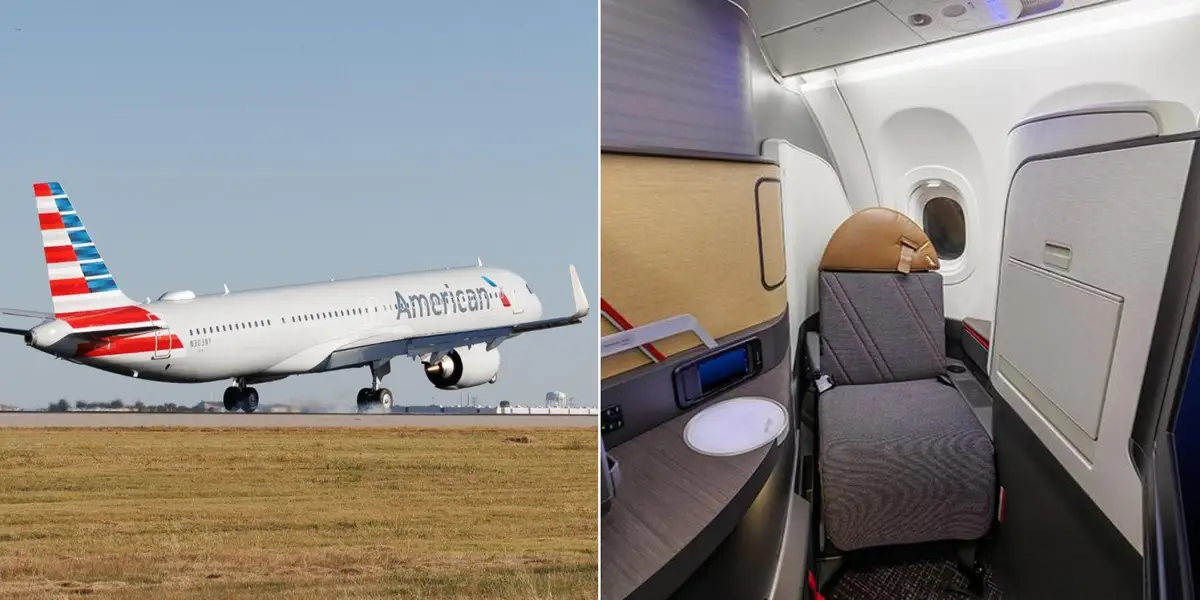
There’s a new jet redefining long-distance travel — and it just landed in the U.S.
American Airlines’ very first Airbus A321XLR touched down at Dallas–Fort Worth International Airport after an 11-hour delivery flight from Hamburg, Germany. It marks a major milestone for both the airline and the country: the first A321XLR in the United States, opening a new chapter of long-haul flying with a single-aisle aircraft.
The Next Evolution in Narrowbody Flying
The “XLR” in A321XLR stands for “extra-long-range.” This aircraft is the next leap from Airbus’s successful A321neo family and is engineered for endurance. With an additional rear center fuel tank, the A321XLR can travel up to 5,400 miles — roughly 800 miles more than its predecessor, the A321LR.
That impressive range makes it perfect for “long-thin” routes — flights that are too far for most narrowbodies but don’t require the capacity of a widebody jet. For passengers, that means more direct international connections from mid-sized U.S. cities to destinations across Europe and beyond.
First Flights and Domestic Debut
The A321XLR’s commercial debut is set for December 18, when it will operate American’s 11 a.m. New York–Los Angeles flight — one of the country’s most competitive premium transcontinental routes.
This new jet will gradually replace the airline’s specialized A321T fleet, which has long been used on luxury transcon flights between JFK, LAX, and San Francisco.
Even before its official debut, interest is sky-high. As of Friday morning, one-way fares for basic economy start at $379, while premium economy and lie-flat business class seats on the inaugural flight are already sold out. The following day’s fares rise to about $1,050 for premium economy and $1,850 for business class, reflecting strong demand for premium experiences.
International Routes Coming in 2026
While its first flights will be domestic, American plans to deploy the A321XLR on international routes in early 2026. The specific routes haven’t been revealed yet, but the extended range makes it ideal for linking secondary U.S. cities with European destinations such as Dublin, Lisbon, or Milan — without requiring larger, more expensive widebody aircraft.
United Airlines and the 757 Replacement Race
American isn’t alone in betting big on Airbus’s newest narrowbody. United Airlines expects to receive its first A321XLRs in 2026, positioning the jet as the natural successor to its aging Boeing 757 fleet. United has hinted that it will use the plane to launch new transatlantic routes, potentially connecting the U.S. to Northern Italy and West Africa — regions that can’t sustain widebody demand but are now within reach of the XLR.
Globally, several carriers — from JetBlue and Iberia to Wizz Air and Air Canada — have already integrated or ordered the model. Configurations vary widely: some feature all-economy cabins for budget routes, while others, like American’s version, lean heavily into premium design.
A Premium-Heavy Layout
American’s A321XLR is designed with a clear focus on high-end travelers. Of the 155 total seats, 20 are business-class suites in a 1-1 configuration, accounting for about 13% of the total capacity. Another 12 premium economy seats bring the premium total to roughly 20% of the cabin — an unusually high share for a narrowbody jet.
This strategy reflects a broader shift in aviation economics. As American’s CEO Rob Isom noted during the company’s third-quarter earnings call, “Premium seating is expected to grow at twice the rate of non-premium offerings, with lie-flat international seating growing by 50% by the end of the decade.”
Flagship Suite Business Class — Doors, Comfort, and Luxury
The new A321XLR debuts American’s latest Flagship Suite Business Class, which first appeared on its Boeing 787 earlier this year. Each suite features a sliding privacy door, a fully lie-flat seat, ample storage, and a personal entertainment screen.
Passengers also enjoy thoughtful amenities: wireless charging, multiple power outlets, and a multi-course meal service that mirrors the airline’s international business class experience.
American’s decision to introduce door-equipped suites puts it in line with global competitors like Qatar Airways and Singapore Airlines, as well as U.S. rival JetBlue, whose “Mint Suites” on the A321neoLR inspired a new era of privacy in narrowbody premium travel.
Exclusive Ground Perks for Premium Flyers
High-paying passengers won’t just see benefits in the air. American’s A321XLR business and premium economy travelers gain access to priority check-in, security lanes, boarding, and baggage handling.
They can also unwind before their flight in exclusive airport lounges, including the Greenwich Lounge at New York–JFK and the Flagship Lounge in Los Angeles — both designed for comfort, dining, and productivity.
Premium Economy: Comfort Without the Cost of Business
Nestled between business and economy, the A321XLR’s premium economy cabin strikes a perfect balance. The 2-2 seat configuration eliminates the middle seat entirely, ensuring every passenger has a window or aisle.
Each recliner seat offers deep recline, a calf and footrest, and headrest privacy wings for a more restful journey. Travelers also receive hot meals, blankets, pillows, and an amenity kit, creating a “mini business class” experience at a more accessible price.
Economy Gets a Long-Haul Upgrade
At the back of the aircraft are 123 economy seats in a traditional 3-3 layout, but even here, the A321XLR elevates expectations. Each seat includes adjustable headrests, multiple power options, and — notably — seatback entertainment screens.
While most of American’s domestic narrowbodies rely on tablet holders and wireless streaming, the inclusion of built-in TVs on the XLR maintains consistency with its transcontinental A321Ts and prepares the jet for future long-haul operations.
This decision aligns American more closely with competitors like Delta Air Lines and United, which offer seatback screens on most domestic flights.
A Broader Strategy: Premiumization of Air Travel
The A321XLR’s arrival represents more than just a new aircraft; it’s part of American’s wider premiumization strategy. Airlines are finding that premium cabins drive a disproportionate share of profits, especially across the Atlantic.
With travelers increasingly willing to pay more for comfort, privacy, and a seamless airport-to-air experience, the A321XLR gives American a competitive edge in both customer satisfaction and route flexibility.
As Heather Garboden, American’s Chief Customer Officer, summarized:
“Whether customers are traveling from coast to coast or across the ocean, American’s newest aircraft demonstrates our commitment to providing a premium travel experience.”
With its impressive range, efficient design, and luxurious interior, the A321XLR is set to reshape the definition of comfort on long, narrowbody flights — proving that smaller jets can still deliver big on luxury.
For more articles like this visit Trenzest.