In the age of modern offices filled with ergonomic chairs, glass walls, and digital collaboration tools, it’s easy to forget just how much workplaces have evolved over the past hundred years. The concept of “vintage office design” transports us back to a time when smoking indoors was a daily habit, secretaries typed on clattering typewriters, and office messengers wore roller skates to deliver notes faster.
Before the world of emails, Teams calls, and Slack messages, the office was a hub of human activity powered by paper, pencils, and patience. Roller-skating messengers carried documents between departments, while large wooden desks were stacked with ledgers and typewriters. Today’s open, tech-driven offices might boast greenery, nap pods, or wellness lounges — but workers of the mid-20th century were lucky if their desk was near a window.
Let’s take a nostalgic journey through the decades to explore how technology, design, and workplace culture have shaped the offices we know today.
The Smoky Offices of the 1940s
One of the most striking elements of vintage office design in the 1940s was the presence of cigarette smoke. Back then, smoking wasn’t just tolerated — it was encouraged. In 1944, Gallup reported that 41% of American adults smoked regularly. Compare that to just 11% in 2022, according to the CDC.
Desks were adorned with ashtrays, and cigarettes were a symbol of focus, sophistication, or even status. Whether it was the corner executive or the office clerk, nearly everyone lit up during the workday. The habit was so normalized that even scientific offices — like those of botanist Edward Wilber Berry in the 1930s — were clouded with pipe smoke.
Today, smoking inside offices is practically extinct, with only a few U.S. states lacking explicit indoor smoking bans. Modern workplaces offer designated outdoor smoking areas, reflecting how much attitudes toward health and safety have evolved.
The Pre-Digital Desk: Design Offices of the 1930s
In 1935, a design office was a landscape of precision instruments and drafting boards. Instead of dual monitors and cloud-based CAD software, workers used drawing boards, compasses, slide rules, and set squares. The noise of mechanical pencils scratching paper replaced the tapping of keyboards.
This was a time when “open-plan offices” looked entirely different. Designers needed space to spread out blueprints and sketches — a luxury that vanished with the arrival of computers and cubicles decades later.
The Typing Pools of the 1950s
If you walked into an office in the 1950s, you’d likely hear a rhythmic symphony of typewriter keys. Typing pools — long rows of desks filled with typists — were a staple of mid-century office culture.
At companies like Marks & Spencer, large rooms were dedicated to teams of typists producing letters, invoices, and reports. These workers, predominantly women, were the backbone of business communication. Each keystroke was a vital cog in the machine of commerce.
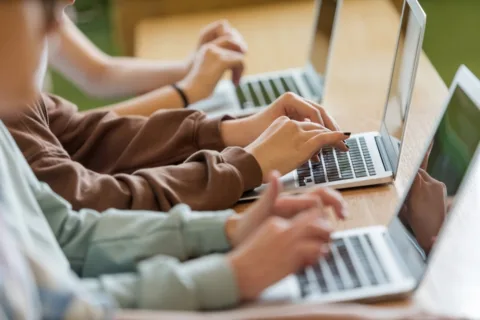
Today, “open floor” plans still exist, but the tools have changed. Shared tables hold laptops, not typewriters. Collaboration now happens digitally rather than through carbon copies and paper memos.
The Age of the Ticker Tape
Before digital stock tickers flashed across TV screens, stock updates arrived through machines that printed financial data on ticker tape. In 1937, the New York Stock Exchange transmitted updates simultaneously to 2,000 ticker machines across 320 towns.
The ticker tape era came to an end in 1960, but its legacy lives on. Financial news still uses the term “ticker,” and the ticker-tape parades of New York — where shredded paper replaced ticker rolls — are a direct descendant of that old technology.
When Calls Were Transcribed by Hand
Long before smartphones and speech-to-text software, secretaries juggled phone calls and note-taking using early amplifiers like the Beoton telephone amplifier of 1960. This primitive speakerphone allowed them to transcribe calls in real time.
Modern technology has made this process almost obsolete. Voice assistants, call transcription apps, and wireless headsets now handle what once required dexterity and concentration.
The Golden Age of Typewriters
The typewriter, first patented in 1867, defined office life for over a century. By the 1930s, rooms filled with workers tested machines before shipping them off to companies worldwide.
Typewriters weren’t just tools — they symbolized progress. They made record-keeping efficient, formalized communication, and gave rise to the modern notion of “clerical work.” Even when early computers emerged, many offices kept typewriters as backups until the 1980s.
Bookkeepers and the Birth of the Modern Desk
In 1970s Los Angeles, bookkeepers — predominantly women — managed records using typewriters, calculators, and early computers. Though the tools have evolved, bookkeeping remains a female-dominated profession even today. In 2022, over 86% of U.S. bookkeepers were women.
These offices marked a transition between analog and digital — a period when numbers began to move from ledgers to screens.
The Rise (and Fall) of the Cubicle
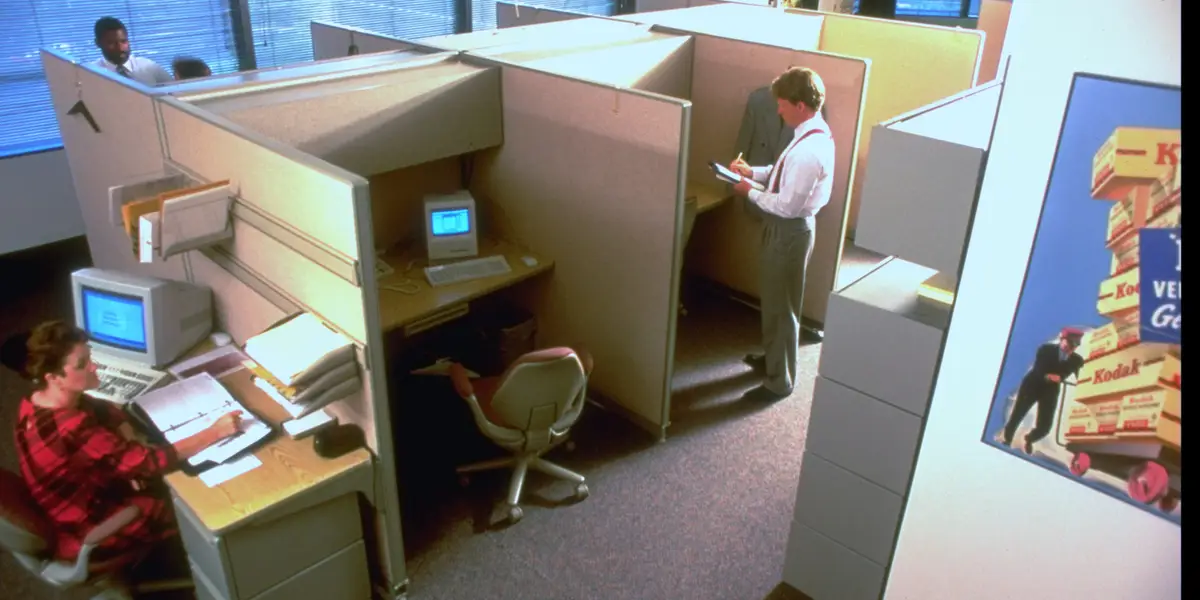
Cubicles were introduced in 1968 by designer Robert Propst, who envisioned them as a way to provide privacy and productivity in an otherwise noisy office. Initially, the concept flopped. But when companies realized cubicles allowed them to fit more employees into less space, the idea caught on — especially in the 1980s and 1990s.
Rows of gray panels and fluorescent lighting became synonymous with corporate America. For better or worse, the cubicle era defined the modern workplace for decades.
Ironically, today’s tech-driven companies are returning to open spaces, emphasizing creativity and connection — yet some are reintroducing cubicle-style privacy pods to balance focus and collaboration.
Messengers on Roller Skates
Before email and instant messaging, office communication relied on human speed. In New York during the mid-20th century, cable companies famously gave their messengers roller skates to deliver notes faster. The result? A 25% increase in delivery speed — though probably a fair number of sprained ankles.
Today, that same spirit of speed lives on in the form of digital collaboration tools. Messages now travel faster than anyone could ever skate.
Tea Ladies and Office Perks
In 1970s Britain, the “tea lady” was an essential figure in office culture. Women like Alice Bond walked through offices with trays of tea, coffee, and biscuits, offering workers a moment of comfort and conversation.
Modern offices have replaced tea trolleys with espresso bars, kombucha taps, and snack stations — proof that while design evolves, the need for human connection never changes.
Record-Keeping Machines of the 1930s
Before cloud storage, physical record-keeping machines were a marvel of efficiency. One device from 1936 could process 80 record cards per minute — cutting-edge for its time.
Now, data that once filled entire rooms fits into servers or uploads to the cloud in seconds. The journey from physical records to digital data defines much of our modern office evolution.
Phone Booths, Radios, and Rotary Phones
By the 1950s, transparent phone booths symbolized modernity and privacy. Decades later, they became relics of a bygone era — until recently, when soundproof “focus pods” brought the concept back to life in open-plan offices.
A typical 1970s desk might feature a rotary phone, ashtray, and typewriter — a perfect snapshot of analog office life. Today, that setup feels quaint, yet many find inspiration in the minimalist aesthetic and tactile quality of vintage office design.
The Timeless Appeal of Vintage Workspaces
From typewriters to cloud servers, the office has undergone a complete transformation. Yet the nostalgia surrounding vintage office design endures — not just for its aesthetics, but for its authenticity. The craftsmanship, materials, and simplicity of early offices contrast sharply with the fast-paced digital environments of today.
As technology continues to evolve, one can’t help but wonder what our workspaces will look like in another 30 years. Perhaps, just like the return of vinyl records and film cameras, the charm of the vintage office will cycle back once again.
For more articles like this visit Trenzest.