Five years after discontinuing their early mobile VR headsets, Samsung and Google have made a bold comeback into immersive technology. Their latest collaboration, the Galaxy XR, marks a new chapter in the mixed reality (MR) landscape—combining Samsung’s hardware expertise, Google’s AI innovation, and Qualcomm’s powerful chipsets.
Originally teased as Project Moohan, the Galaxy XR is the first headset powered by Android XR, a new platform designed specifically for smart glasses and headsets. Built on Google’s Gemini AI assistant and Android’s robust ecosystem, the Galaxy XR aims to merge physical and digital worlds seamlessly.
The headset officially launches today in the US and South Korea, priced at $1,800. For those preferring installment options, Samsung offers a financing plan of $149 per month for 12 months. While this price surpasses mainstream options like Meta’s Quest 3, it still undercuts Apple’s Vision Pro, which starts at $3,499 and now features the upgraded M5 processor.
A New Vision for Extended Reality
At a private media event in New York, journalists were given a closer look at the Galaxy XR. The event, hosted by Samsung, Google, and Qualcomm, confirmed the device is powered by Qualcomm’s latest Snapdragon XR2+ Gen 2 chip—ensuring high-end graphics and responsive performance for mixed reality applications.
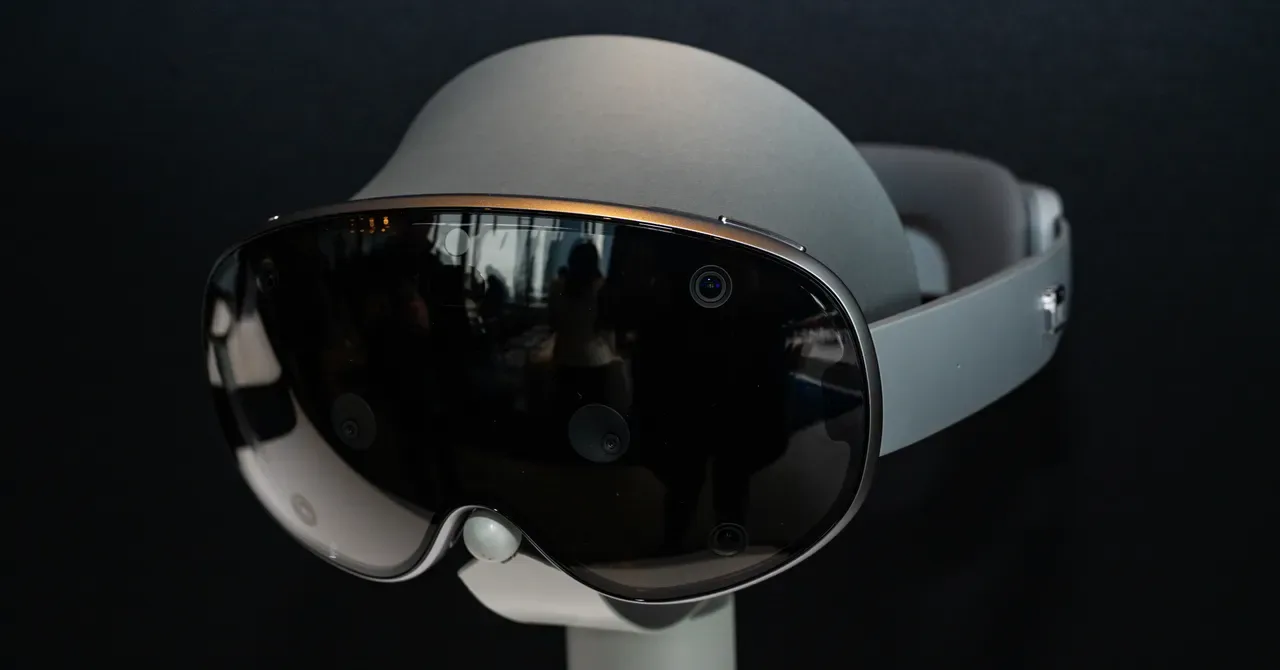
The hands-on experience closely mirrored earlier demos, but this time with official pricing and branding unveiled. The Galaxy XR promises an immersive environment where users can see their real-world surroundings through high-quality pancake lenses, enhanced by digital overlays. Whether you’re exploring virtual environments or multitasking with digital apps, the Galaxy XR is designed for intuitive control using hand gestures and eye tracking.
Unlike traditional VR systems, the Galaxy XR doesn’t rely solely on controllers—though optional controllers can be purchased separately. Users can also access apps directly from the Google Play Store, with specially optimized software labeled “Made for XR.”
Design and Comfort
While Samsung’s Galaxy XR doesn’t quite match the luxury aesthetics of Apple’s Vision Pro, it offers practical advantages. The build feels lighter and more comfortable, thanks to its plastic body and tethered external battery pack. Although the demo unit showed minor wear with fingerprint smudges, the lighter construction makes long-term use more feasible.
During a 25-minute demo session, the headset remained comfortable, with only a slight buildup of heat near the top. The battery pack stayed cool throughout use. The Galaxy XR delivers around 2 to 2.5 hours of battery life, depending on usage—similar to the first Vision Pro model. The updated Vision Pro M5 now pushes that slightly higher during mixed-use sessions, but Samsung’s battery performance remains competitive for its debut model.
The Future of Android-Powered XR
The Galaxy XR represents more than a single product—it’s the foundation of Android XR, Google’s ambitious platform for the next generation of immersive devices. By combining AI-driven interactions, cross-platform app support, and intuitive mixed-reality controls, Samsung and Google are setting the stage for an ecosystem that could rival Apple’s dominance in the spatial computing space.
With the Galaxy XR, the companies have taken a confident leap into the future of extended reality, where digital and physical experiences merge into one fluid interface.
For more articles like this visit Trenzest.