
Introduction: The Power of Problem Solving
Solving complex problems often starts with organization: breaking challenges into smaller, manageable pieces. This is especially true in the world of computer science, where algorithm efficiency can determine how fast and effectively we navigate modern digital networks. But what happens when the act of organizing itself becomes the bottleneck?
This exact dilemma lies at the heart of one of the most iconic problems in computing: finding the shortest path in a network. It’s a concept that affects not just mathematicians or developers—but anyone who has ever used a GPS app, logistics platform, or ride-sharing service.
“Shortest paths is a beautiful problem that anyone in the world can relate to,” said Mikkel Thorup, computer scientist at the University of Copenhagen.
Understanding the Shortest-Path Problem
Why Shortest Paths Matter
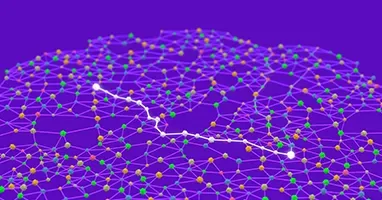
The shortest-path problem aims to determine the most efficient route between two points in a network. Think of it as figuring out the quickest way from your new home to work, the gym, or your favorite café.
This principle is not only central to navigation apps but also critical in areas like:
- Network optimization for faster data transfer
- Supply chain logistics for minimizing transport costs
- Telecommunications for efficient signal routing
- AI pathfinding in robotics and gaming
The Sorting Barrier Explained
To solve this problem, algorithms traditionally start at a single source node and calculate the shortest distance to each connected point. A classic approach involves sorting nodes by their distance: closest first, then progressively farther away.
This strategy, however, hits a fundamental speed limit—the sorting barrier. The time it takes to sort the nodes becomes the ceiling for how fast the entire algorithm can run. For over 40 years, computer scientists considered this limit unbreakable.
One of the earliest and most celebrated solutions to the shortest-path problem came from Edsger Dijkstra in 1956. His algorithm remains foundational to this day, but it is inherently constrained by this sorting process.
Learn more about Dijkstra’s algorithm on Wikipedia →
A New Breakthrough in Algorithm Design
A team of visionary researchers recently achieved what many thought was impossible: they broke the sorting barrier. Their new algorithm doesn’t rely on sorting at all—allowing it to run faster than any traditional approach.
“The authors were audacious in thinking they could break this barrier,” said Robert Tarjan, computer scientist at Princeton University. “It’s an amazing result.”
This innovation marks a major milestone in algorithmic efficiency, opening new possibilities for everything from large-scale network routing to real-time AI computations.
Real-World Impact: Beyond Theory
This isn’t just a theoretical triumph. The practical applications of breaking the sorting barrier are immense:
- Faster navigation systems for transportation and delivery services
- More efficient cloud computing through optimized data routing
- Accelerated AI decision-making for autonomous vehicles and robotics
- Reduced operational costs in logistics and supply chain networks
When algorithms can process shortest-path calculations faster, businesses can scale more efficiently—and users experience more seamless digital services.
How Trenzest Amplifies Innovation
At Trenzest, we believe technological breakthroughs should drive real-world impact. By integrating emerging algorithmic advances like this into marketing intelligence, predictive analytics, and digital optimization, we help brands operate with unprecedented speed and precision.
Our AI-driven solutions leverage advanced graph theory principles to improve data flow, customer journey mapping, and real-time performance tracking—ensuring your business stays ahead of the curve.
Conclusion: The Future of Fast Algorithms
The breaking of the sorting barrier represents more than just a computer science milestone—it’s a catalyst for innovation across industries. By removing a decades-old bottleneck, researchers have unlocked new frontiers of computational speed and efficiency.
Companies like Trenzest are translating these advances into practical tools that help marketers, entrepreneurs, and tech innovators accelerate growth. The shortest path to transformation just got a lot shorter.