
Introduction: A Pivotal Shift in the EV Market
The U.S. electric vehicle (EV) landscape is at a turning point. With the expiration of federal EV tax credits, automakers are reimagining their strategies to maintain momentum in a maturing yet fiercely competitive industry. What began as a government-backed push toward electrification has now evolved into a market-driven race for consumer attention, innovation, and affordability.
The End of Federal EV Tax Credits
On September 30, the long-standing $7,500 federal tax credit for electric vehicles officially ended, marking the close of a major chapter in U.S. EV adoption. For years, this credit was a key incentive, reducing upfront costs and making EVs more accessible to mainstream buyers.
With this support gone, automakers must now rely on private incentives and strategic pricing to stay competitive in a changing market. This shift is expected to reshape how electric vehicles are marketed and sold in the months ahead.
For background on EV incentives, you can explore official resources from the U.S. Department of Energy.
Automakers’ New Pricing Strategies
Tesla’s Streamlined Approach
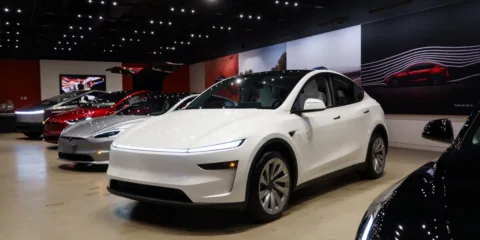
Tesla, often a bellwether for the EV sector, unveiled lower-cost versions of its Model 3 and Model Y shortly after the credit expired. By removing select features—such as power seats, FM/AM radio, and its driver-assistance software, Autopilot—the company managed to reduce prices by approximately $5,000.
This move is designed to keep Tesla’s models within reach of budget-conscious buyers while maintaining its premium brand positioning.
Legacy Automakers and Discount Programs
Other major automakers are taking a different route. Hyundai is currently offering up to $11,000 in cash-back incentives on select trims of its 2025 Ioniq 5. Meanwhile, Ford and General Motors are exploring creative financing strategies, including applying portions of the former tax credit toward down payments at dealerships, according to Reuters.
Each of these approaches underscores the same objective: sustain EV sales levels without the crutch of federal tax incentives.
Creative Incentives Beyond Federal Support
Industry experts emphasize that these strategies are less about accelerating growth and more about maintaining stability in a market facing rising costs, economic uncertainty, and evolving consumer preferences.
Ivan Drury, Director of Insights at Edmunds, notes that “the overarching message of tax credits going away for EVs has led to a wide range of creative approaches. Which approach will win out remains to be seen.”
Market Recalibration: A Pause, Not a Retreat
While discounts and incentives are keeping demand afloat, some automakers are simultaneously reassessing their EV lineups.
Stellantis has announced it will discontinue the Ram REV 1500, citing slowing demand in North America.
Acura is ending production of the ZDX, aligning with longer-term strategic goals. However, the brand will revive the iconic RSX nameplate as a compact all-electric SUV, launching in the second half of 2026.
These shifts don’t signal a retreat but rather a strategic recalibration to align product offerings with actual market demand.
The Role of Data and Trends Platforms
For automakers, marketers, and investors navigating this transition, real-time market intelligence is critical. Platforms like Trenzest offer actionable insights into evolving EV market trends, consumer sentiment, and competitive strategies.
Understanding how consumer behavior shifts post-incentive can help stakeholders refine their pricing, marketing, and product launch strategies.
Looking Ahead: What’s Next for the EV Ecosystem
The EV industry is entering a market maturity phase, where brand differentiation, pricing agility, and ecosystem partnerships will play a larger role than subsidies. Expect to see:
More mid-tier EV models with stripped-down features and competitive pricing.
Increased collaborations between automakers and charging network providers.
Greater reliance on predictive analytics to align supply with fluctuating demand.
Conclusion: Navigating the Post-Credit EV Era
The end of federal EV tax credits marks not a slowdown but a new era of strategic innovation. Automakers are adopting bold pricing strategies, revisiting their product roadmaps, and experimenting with creative financing options.
For businesses and entrepreneurs, staying ahead requires leveraging trend intelligence and adapting fast. Platforms like Trenzest can provide the real-time insights needed to make informed decisions and seize emerging opportunities in the evolving EV landscape.