
Introduction
The race for silicon supremacy is heating up. Qualcomm’s latest announcements at its Snapdragon Summit signal a bold new era for both PCs and mobile devices. With cutting-edge graphics performance, unprecedented AI capabilities, and a roadmap toward 6G connectivity, Snapdragon is positioning itself at the forefront of innovation.
This article dives deep into Qualcomm’s newest chips, their impact on everyday computing, and what this means for the broader tech ecosystem.
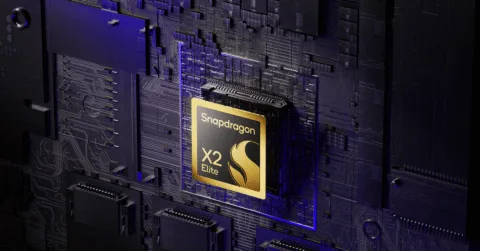
Snapdragon X2 Elite: Redefining PC Performance
Advanced GPU Architecture
Perhaps the most exciting development is the graphics performance. Both the Snapdragon X2 Elite and X2 Elite Extreme leverage a completely new Adreno GPU architecture. Qualcomm claims 2.3X improvement in power efficiency, allowing laptops to scale up for demanding workloads such as gaming or creative applications while maintaining energy balance.
Next-Level On-Device AI Processing
At the heart of the innovation lies a much more powerful Neural Processing Unit (NPU). With 80 TOPS (trillions of operations per second) of AI performance, it sets a new benchmark in the industry. For context, the original Snapdragon X featured 50 TOPS, which competitors like Apple, Intel, and AMD scrambled to match.
While average users may not yet fully benefit from AI running directly on their laptops, this leap forward incentivizes developers to create more advanced AI-driven applications, spanning everything from real-time image editing to predictive analytics.
Battery Life and Efficiency
Qualcomm has shifted its messaging with the X2 lineup. While the first-generation Snapdragon X chips were marketed around battery longevity, the new models put performance front and center. That said, Qualcomm still claims “multi-day battery life,” a feature that could appeal to professionals and creators who value mobility.
Market Timing and Competitive Landscape
Strategically, Qualcomm is playing its cards early. These second-generation PC chips have been announced months ahead of rivals, giving them an edge in visibility and benchmarking against prior-gen devices.
Intel is gearing up to launch its A18 Panther Lake chips later this year.
Nvidia’s $5 billion investment in Intel may disrupt the PC market entirely.
Apple’s upcoming M5 chip could also shift the balance of power.
For now, Qualcomm enjoys the first-mover advantage.
Snapdragon 8 Gen 5: The Mobile Powerhouse
Fastest Mobile CPU in the World
On the smartphone side, Qualcomm introduced the Snapdragon 8 Gen 5. Already competing head-to-head with Apple’s newly launched A19, Qualcomm claims its processor is the “fastest mobile CPU in the world,” clocking at an impressive 4.6 GHz, outpacing Apple’s 4.26 GHz A19 Pro.
Graphics & AI Performance Enhancements
Like its PC counterpart, the Snapdragon 8 Gen 5 focuses heavily on graphics and AI acceleration:
23% faster GPU performance
37% faster NPU performance
While marginal single-core CPU gains may not be noticeable to everyday users, the GPU improvements promise smoother, more immersive gaming experiences.
Advanced Professional Video Codec (APV)
Another standout feature is APV (Advanced Professional Video), a near-lossless video codec developed in collaboration with Samsung. Designed to rival Apple’s ProRes, APV reduces storage consumption without sacrificing quality—a significant win for content creators.
Upcoming Smartphone Launches
The Snapdragon 8 Gen 5 will soon power flagship devices from Xiaomi, OnePlus, Samsung, Honor, and others. Qualcomm’s rapid rollout ensures these smartphones reach consumers quickly, solidifying its leadership in the premium Android market.
AI, 6G, and the Future of Android Ecosystem
Looking ahead, Qualcomm’s CEO Cristiano Amon highlighted 6G as the next major connectivity standard. Unlike 5G, which focused on speed, 6G is designed as a bridge between cloud and edge computing, enabling AI-driven, real-time interactions across devices.
This shift will not only transform mobile connectivity but also redefine how Android ecosystems leverage on-device AI for enhanced personalization, automation, and security.
Why This Matters for Innovators and Businesses
For tech entrepreneurs, marketers, and developers, these advancements open doors to new possibilities:
Enhanced gaming experiences powered by superior GPUs
Smarter apps utilizing high-performance NPUs
Content creation tools benefiting from APV efficiency
New business models built around AI-enabled 6G connectivity
The opportunities are vast, and those who adopt early will likely gain a competitive advantage.
Trenzest: Navigating the Future of Tech
At Trenzest, we specialize in analyzing, curating, and forecasting the latest technology trends. From AI-driven applications to mobile-first innovations, we provide actionable insights for businesses and innovators looking to stay ahead.
Whether you’re a startup exploring emerging markets or a brand seeking to adapt digital strategies, our expertise ensures you’re always in tune with what’s next. Explore more on our AI insights to understand how these shifts can impact your industry.
Conclusion
Qualcomm’s latest lineup—Snapdragon X2 Elite for PCs and Snapdragon 8 Gen 5 for smartphones—marks a turning point in how we think about computing, AI, and connectivity. By prioritizing performance, graphics, and AI processing power, Qualcomm sets a new industry standard while opening doors for developers, creators, and businesses alike.
The future of technology is fast approaching—and with Trenzest by your side, you’ll be prepared to not just keep up but lead.