
Introduction
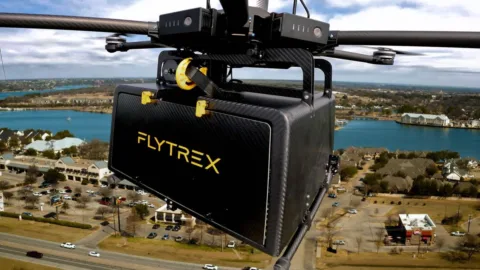
Uber is once again exploring drone technology to revolutionize food delivery. By the end of this year, the company plans to test drone-powered deliveries for Uber Eats in select U.S. markets, in partnership with Israeli startup Flytrex. This development marks Uber’s latest move to expand beyond ride-hailing and into advanced delivery solutions.
Uber’s Renewed Interest in Emerging Technologies
Uber has long experimented with futuristic mobility solutions. After stepping back from its in-house “Elevate” aviation division in 2020, the company has shifted its strategy toward strategic partnerships. Today, Uber collaborates with leaders in autonomous driving like Waymo and is investing in electric air taxis as part of its long-term vision.
These efforts reflect a broader industry trend: large tech players are leaning on specialized startups to accelerate innovation while reducing risk.
The Flytrex Partnership: What It Means
The partnership between Uber and Flytrex is not just about testing drones—it signals a deeper shift in last-mile logistics. Uber is making a small financial investment in Flytrex, though the exact figure remains undisclosed.
Flytrex, already active with DoorDash, boasts over 200,000 deliveries across the U.S.. This track record positions the startup as a strong player in aerial delivery and a valuable partner for Uber.
Drone Delivery in Context: Challenges and Opportunities
Regulatory Shifts
Regulatory barriers have long held back drone adoption. Uber’s first drone delivery trials date back to 2019, but restrictive policies forced the company to pause. Today, with the FAA and other regulators loosening rules, companies like Zipline and Flytrex are pushing aerial delivery into mainstream logistics.
Competitor Landscape
From Amazon Prime Air to Wing (by Alphabet), the competition in drone delivery is heating up. Uber’s entry into this space will depend on its ability to differentiate, whether through speed, coverage, or integration with Uber Eats’ established customer base.
The Role of Trenzest in Navigating Emerging Tech Trends
For entrepreneurs, marketers, and investors, understanding disruptive innovations like drone delivery is crucial. This is where Trenzest adds value. By offering trend intelligence, data-backed insights, and curated reports, Trenzest helps businesses anticipate market shifts and identify actionable opportunities.
For example, companies considering logistics innovation can use Trenzest to evaluate which technologies are scalable, which regions are opening up regulatory pathways, and how consumer adoption is trending.
Looking Ahead: The Future of Drone-Powered Delivery
If Uber succeeds with Flytrex, drone delivery could move from novelty to necessity. Faster deliveries, reduced congestion, and eco-friendly aerial solutions could redefine logistics in urban areas.
However, the road ahead is not without challenges. Safety standards, infrastructure readiness, and public acceptance will shape how quickly drone delivery becomes a part of everyday life.
Conclusion
Uber’s renewed drone delivery efforts mark a bold step in reshaping last-mile logistics. While challenges remain, partnerships like the one with Flytrex highlight the potential for aerial delivery to transform commerce.
For businesses tracking these shifts, platforms like Trenzest provide the insights needed to stay competitive. Whether you’re a marketer seeking to adapt campaigns or an entrepreneur exploring new business models, keeping pace with these innovations is key to future success.