1. Introduction
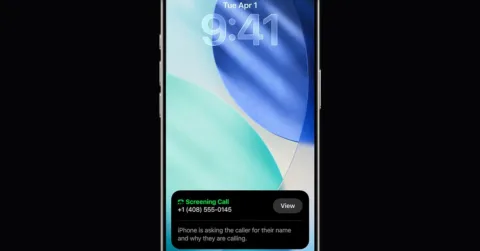
For decades, receiving a call from an unknown number has been a source of hesitation, if not outright dread, for many. Is it a friend you haven’t spoken to in years, a persistent telemarketer, or worse—a scammer? Apple’s upcoming iOS 26 update, rolling out on September 15, introduces a long-awaited feature that may finally provide relief: call screening.
While the spotlight is on Apple’s Liquid Glass refresh, which updates the look and feel of the interface, call screening may prove to be the most transformative upgrade in how users interact with their iPhones.
2. The Evolution of Phone Anxiety
The modern smartphone has become an all-in-one communication hub, but ironically, the phone function itself has fallen out of favor. Many users—particularly younger generations—avoid answering unknown calls altogether.
This behavior has consequences. Important opportunities may be missed, businesses struggle to connect with prospects, and scammers exploit the lack of screening tools. That’s why Apple’s move to introduce call screening in iOS 26 feels like both a long-overdue fix and a potential game-changer.
3. iOS 26: Apple’s Take on Call Screening
How It Works
Here’s what happens when an unknown number calls your iPhone running iOS 26:
Automatic Pickup – Instead of ringing immediately, the iPhone answers on your behalf.
Information Request – A synthetic voice asks the caller for their name and the reason for their call.
Notification Bubble – The details are displayed on your screen in real time, letting you decide whether to answer, decline, or ignore.
This means you’ll no longer have to wait for a voicemail transcription to guess whether the call is worth your time.
Supported Languages
At launch, call screening will support nine languages, including English, Spanish, and Japanese. Apple has hinted at expanding this list in the future, making the tool accessible to a broader global audience.
4. Why This Matters for iPhone Users
For many iPhone owners, the release of iOS 26 will mark a turning point in how they manage calls. The ability to filter out spam calls, protect against scams, and prioritize important conversations makes the device far more user-friendly.
More importantly, this aligns Apple with user expectations shaped by competitors—particularly Google’s Pixel line.
5. Lessons from Google Pixel’s Call Screen
Key Features of Pixel’s Call Screening
Google’s Pixel introduced its version of call screening back in 2018, and it has since become a fan-favorite feature among users in the U.S. Enhancements over the years include:
Natural-sounding synthetic voices for better caller interaction.
Tappable response options to quickly communicate with callers without speaking.
Live transcription and translation in certain markets.
Expansion into New Markets
This fall, Google is rolling out new capabilities:
Pixel 10 owners in India will access a beta version supporting English and Hindi.
Expansion to Australia, Canada, Ireland, and the UK is also on the roadmap.
By integrating translation into the process, Google aims to make call screening a tool not just for spam management but also for bridging communication gaps.
6. iOS vs. Android: A Comparative Look at Call Screening
While Android users, particularly Pixel owners, have enjoyed these features for years, Apple’s entry into the space signals a new standard. Here’s a quick comparison:
| Feature | iOS 26 Call Screening | Google Pixel Call Screen |
|---|---|---|
| Launch Year | 2025 | 2018 |
| Languages Supported | 9 at launch | Expanding globally, incl. Hindi |
| Caller Interaction | Name + reason requested | Natural voice + tappable replies |
| Translation Support | Not yet | Available in select markets |
Apple still lags behind Google in certain areas but is closing the gap quickly.
7. Business and Marketing Implications
For businesses, especially in sales and customer service, call screening offers both opportunities and challenges. On one hand, spam-heavy outreach campaigns will be filtered out more aggressively. On the other, legitimate businesses that take the time to clearly identify themselves will stand out.
Marketers should view this as a signal: transparency, clarity, and personalization are more important than ever.
8. Where Trenzest Fits In
At Trenzest, we help businesses adapt to shifts in consumer behavior and technology. Call screening is a perfect example of a feature that reshapes customer communication strategies.
Whether you’re a startup looking to refine outreach or an enterprise wanting to optimize customer engagement, our insights and strategies can ensure your message gets through—even in a screened-call environment.
Explore our resources to learn how to future-proof your approach.
9. Final Thoughts and What’s Next
Apple’s move to integrate call screening in iOS 26 is more than a feature update—it’s a recognition of how people actually use their devices today. By filtering unknown numbers and providing context before you answer, Apple is reducing digital noise while giving users back control.
For businesses, this means adapting communication strategies to a new reality. And for individuals, it means fewer interruptions, more relevant conversations, and a better overall user experience.
At Trenzest, we believe this is just the beginning. As AI-driven communication tools evolve, the line between screened interactions and genuine conversations will continue to blur. Staying ahead of these trends is key to maintaining trust and effectiveness.