
1. Introduction: The Spark Behind China’s EV Dominance
The proverb “iron sharpens iron” perfectly captures the essence of China’s electric vehicle (EV) revolution. With relentless competition and strong policy support, Chinese automakers have rapidly evolved into global leaders—disrupting traditional players like Tesla and Ford while setting new benchmarks for affordability, technology, and speed of innovation.
2. Dara Khosrowshahi on Chinese EV Innovation
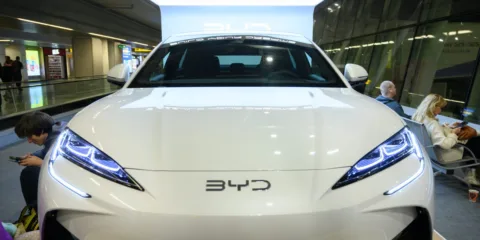
On Nikhil Kamath’s podcast, People by WTF, Uber CEO Dara Khosrowshahi described Chinese EV models as “unbelievable,” highlighting the extraordinary pace of innovation among Chinese original equipment manufacturers (OEMs). He emphasized that he has “never seen anything like it,” underscoring how quickly companies such as BYD and Geely have matured through intense competition.
3. Why Chinese Automakers Are Outpacing the West
The Role of Competition
Unlike in many markets, nearly every Chinese city or province backs its own EV startup. This has led to the rise of more than 100 OEMs, each striving to outperform the rest. The result? Fierce, bottom-up innovation that constantly raises the bar.
Government Strategy Meets Market Agility
China’s unique blend of top-down industrial policy and bottom-up competition has created an ecosystem where survival depends on delivering superior quality, affordability, and technological breakthroughs.
4. The Global Impact: Pressure on Tesla, Ford, and Others
Western automakers are taking notice. Ford CEO Jim Farley recently admitted that Chinese EVs are “far superior” in cost, quality, and technology. This growing gap signals a challenge for U.S. and European brands, forcing them to rethink pricing strategies, in-car experiences, and long-term sustainability efforts.
5. Uber’s EV Strategy and Partnerships
Under Khosrowshahi’s leadership, Uber has leaned heavily into electrification. In July, Uber invested $300 million into Lucid Motors, betting on the company’s Gravity EV for future robotaxi fleets. Partnerships with Waymo further highlight Uber’s strategy to integrate autonomous EVs into its platform, with pilots already underway in Phoenix, Austin, and Atlanta.
6. Lessons for Entrepreneurs and Marketers
The Chinese EV story is a powerful reminder: markets evolve fastest when innovation meets competition. For startups, this underscores the importance of adaptability, while for marketers, it highlights the need to position products not just on features, but on speed-to-market and customer experience.
7. Where Trenzest Fits In: Navigating the Future of Innovation
At Trenzest, we specialize in helping businesses and entrepreneurs decode fast-moving trends like China’s EV boom. By leveraging insights, competitive analysis, and innovation frameworks, Trenzest equips decision-makers to stay ahead of disruption—whether in mobility, AI, or emerging technologies.
8. Conclusion: Survival of the Fittest in the EV Era
China’s EV market is a case study in how competition and policy can drive extraordinary progress. As Khosrowshahi noted, it’s truly “survival of the fittest.” For Western automakers, entrepreneurs, and innovators alike, the message is clear: adapt quickly, or risk falling behind.
With Trenzest as your partner, you can turn disruption into opportunity and prepare for the next wave of global innovation.



Somebody essentially lend a hand to make significantly articles Id state That is the very first time I frequented your website page and up to now I surprised with the research you made to make this actual submit amazing Wonderful task