1. Introduction: When Bananas Meet AI
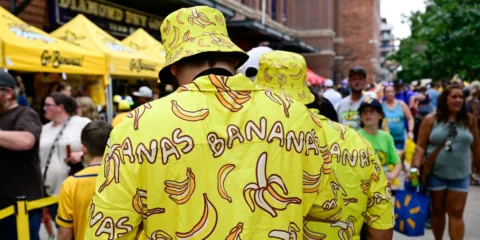
Every now and then, a mysterious new technology captures the imagination of the internet. The latest to do so is an image generation model with an unusual name: Nano-Banana. While the term may sound quirky, it has quickly become the subject of speculation, debate, and excitement within the AI community.
What makes this particularly intriguing is not just its performance but the uncertainty surrounding its origins. The conversation around Nano-Banana highlights how quickly new AI models can shift expectations—and how businesses, marketers, and creators need to stay alert to these shifts.

The Denver Post via Getty Images
2. What is Nano-Banana?
Nano-Banana is an AI-powered image generation model that first appeared on LMArena, a crowdsourced benchmarking website. LMArena allows users to “battle” two AI models against each other in blind tests, where participants vote for whichever image best matches the prompt.
What surprised many was how often Nano-Banana stood out. Users began noticing its ability to generate stunningly accurate, detailed, and creative images—outperforming even some of the most established models.
The model’s sudden rise has raised eyebrows, not only because of its effectiveness but also because no one seems to know who developed it.
3. Why the Model is Generating Buzz
Performance on LMArena
On LMArena, Nano-Banana consistently impressed with its ability to balance creativity and precision. While it occasionally stumbled on fine details such as text generation—a challenge even for leading models—it proved adept at rendering visuals that captured the essence of prompts with remarkable accuracy.
User Impressions Across Reddit and X
Tech enthusiasts across platforms like Reddit and X (formerly Twitter) have been vocal about their experiences. Many users praised the model’s refined image editing capabilities and its ability to adjust details seamlessly when prompted. These impressions positioned Nano-Banana as not just another AI model, but a potential game-changer.
4. Who is Behind Nano-Banana? The Leading Theories
The Case for Google
The most popular theory is that Nano-Banana belongs to Google. Several breadcrumbs fuel this speculation:
Earlier this month, Google began hinting at new image-related projects.
Logan Kilpatrick, Google’s Head of Product for AI Studio, cryptically posted a banana emoji on X.
Naina Raisinghani, a Google DeepMind product manager, shared an image reminiscent of Maurizio Cattelan’s iconic banana art piece.
Given Google’s history of naming its smaller models “nano,” the connection seems plausible—especially with a major device event on the horizon.
Alternative Possibilities
While Google seems the most likely candidate, other players could be involved. Open-source communities or even smaller AI labs could have introduced the model as a stealth launch to test user reactions before a broader release.
5. The Significance of “Nano” in AI Models
The word “nano” hints at something particularly important: local deployment. If Nano-Banana is indeed a smaller, more efficient model capable of running directly on personal devices, it could mark a turning point in accessibility.
This would mean users no longer need to rely solely on cloud infrastructure for high-quality AI experiences—a shift that could democratize advanced image generation for creators, startups, and even individual hobbyists.
6. Why This Matters for Businesses, Marketers, and Creators
AI image models are not just technical curiosities—they’re reshaping industries. For businesses, the rise of models like Nano-Banana signals:
Faster creative workflows: Rapid prototyping of designs, campaigns, and visuals.
Cost efficiency: Reduced reliance on expensive design tools or outsourced creative work.
Personalization at scale: The ability to generate customized, audience-specific content with ease.
Staying ahead of these developments allows entrepreneurs and marketers to harness new opportunities before they become mainstream.
7. Where Trenzest Fits Into the Conversation
At Trenzest, we track these emerging trends to help businesses make sense of the shifting AI landscape. Tools like Nano-Banana highlight just how quickly the future of creativity is evolving, and Trenzest is committed to ensuring you don’t get left behind.
Our insights go beyond hype, offering actionable strategies for integrating AI into marketing, design, and brand storytelling. Whether you’re a startup looking to differentiate or a larger organization aiming to streamline content production, Trenzest provides the clarity and direction you need.
8. The Future of Image Models and What Comes Next
As speculation continues, one thing is clear: Nano-Banana has set a new benchmark for AI image generation. If it is indeed tied to Google, its official reveal could reshape competition among image models overnight.
Looking ahead, we can expect:
More powerful local models that reduce dependence on cloud-based systems.
Integration into creative tools that marketers and designers already use.
A greater focus on ethics and attribution as generated images become harder to distinguish from real-world photos.
9. Conclusion: From Mystery to Market Impact
The rise of Nano-Banana shows how quickly the AI ecosystem can shift, and how a single mysterious model can ignite both curiosity and innovation. For businesses, marketers, and creators, this is a reminder that adaptability is no longer optional—it’s essential.
At Trenzest, we help you navigate this landscape with clarity, strategy, and foresight. Stay tuned to our insights for updates, and be ready to embrace the next wave of AI-driven creativity.

you are in reality a good webmaster The website loading velocity is amazing It sort of feels that youre doing any distinctive trick Also The contents are masterwork you have done a fantastic job in this topic
Thank You. Would you like to write blogs on this website?