
Introduction: Nvidia’s Strategic Shift
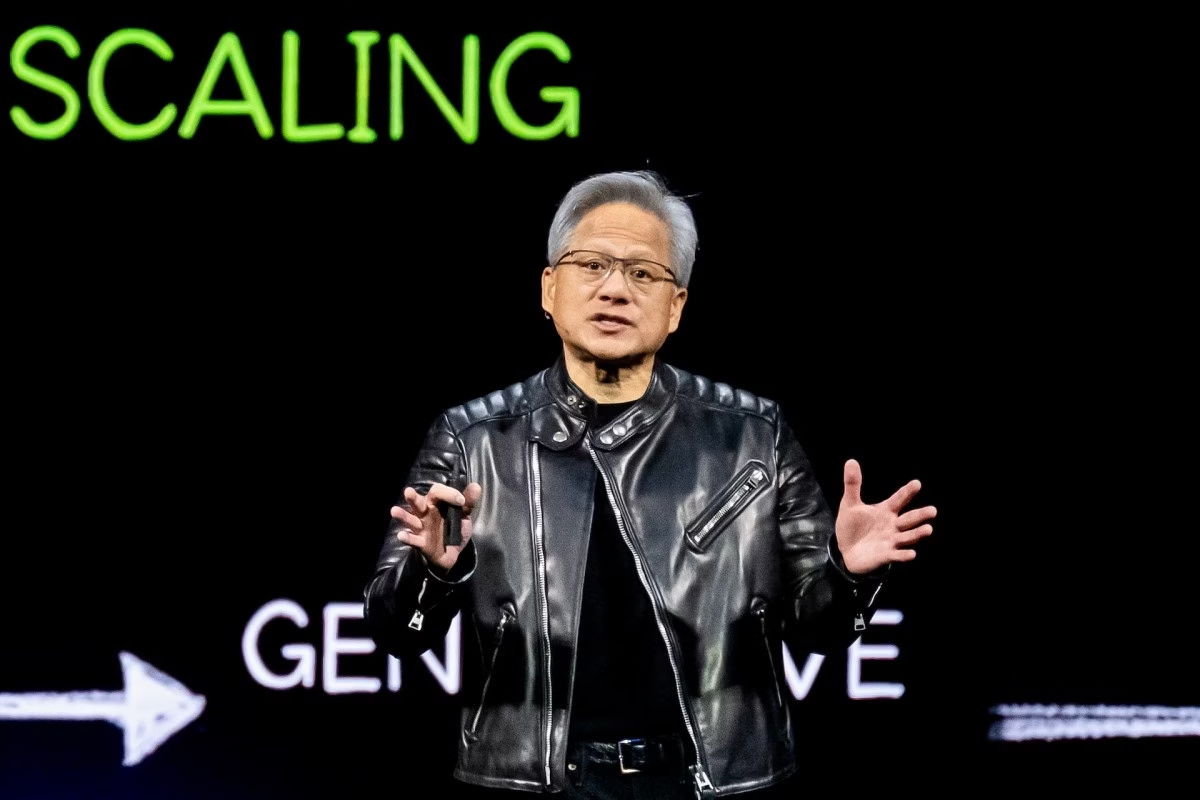
In a pivotal move reshaping the global AI infrastructure landscape, Nvidia has announced it is investing heavily in domestic chip manufacturing in the United States. The company revealed that it has commissioned over one million square feet of space across Arizona and Texas to produce and test its cutting-edge AI chips.
This decision underscores a broader trend of reshoring high-tech manufacturing and reflects the growing emphasis on technological sovereignty, particularly in strategic industries like artificial intelligence and semiconductors.
U.S. Manufacturing Expansion: Arizona and Texas
Nvidia’s plan isn’t just symbolic—it’s a full-scale industrial strategy to localize a significant portion of its manufacturing processes. The company’s latest Blackwell AI chips, crucial to powering next-generation AI models and infrastructure, are already in production at Taiwanese Semiconductor Manufacturing Company (TSMC) facilities in Phoenix, Arizona.
Arizona: Production and Packaging
In Arizona, Nvidia is teaming up with packaging and testing specialists Amkor Technology and Siliconware Precision Industries (SPIL) to streamline and scale operations. These partnerships ensure that AI chip production in the region is not only cutting-edge but also vertically integrated, allowing for greater speed and efficiency in the delivery of high-performance chips to the market.
Texas: Supercomputer Manufacturing
Meanwhile, in Texas, Nvidia is building massive supercomputing manufacturing plants in collaboration with Foxconn in Houston and Wistron in Dallas. These facilities aim to support the growing demand for AI supercomputers, which are essential for training and deploying large-scale machine learning models.
With mass production expected to ramp up over the next 12 to 15 months, Nvidia is positioning itself to deliver critical infrastructure domestically—an important pivot in today’s politically sensitive tech ecosystem.
Scaling Up: Jobs, Infrastructure, and Economic Impact
The implications of Nvidia’s expansion are enormous. According to company projections, the new facilities could generate up to half a trillion dollars’ worth of AI infrastructure in the U.S. over the next four years. Additionally, this effort is anticipated to create “hundreds of thousands” of jobs, both directly and through adjacent industries.
As CEO Jensen Huang remarked, “The engines of the world’s AI infrastructure are being built in the United States for the first time.” He emphasized how domestic manufacturing enhances Nvidia’s ability to meet surging demand, bolsters supply chain resilience, and reduces overdependence on foreign production hubs.
Policy Pressure and Strategic Alliances
This announcement arrives at a politically charged moment. According to NPR, Nvidia narrowly avoided export restrictions on its H20 AI chips—the most advanced U.S.-approved chip that can still be exported to China. Reports suggest that a commitment from Huang to invest in American AI infrastructure helped avert further restrictions.
The Biden and Trump administrations have both emphasized an “America-first” strategy when it comes to AI and semiconductor development. Nvidia’s investment follows similar moves by other tech giants:
OpenAI, in collaboration with SoftBank and Oracle, has launched the $500 billion Stargate Project for U.S.-based data centers.
Microsoft has pledged $80 billion for AI infrastructure, with half of that allocated for facilities in the U.S.
Political influence has also played a role in reshaping corporate decisions. Former President Trump reportedly pressured TSMC to build new factories in the U.S. by threatening import tariffs of up to 100%, forcing the global chipmaker’s hand in favor of domestic investment.
How Trenzest Views the AI Manufacturing Landscape
At Trenzest, we closely follow trends that shape the future of AI, automation, and digital transformation. Nvidia’s U.S. expansion isn’t just about production—it’s about reclaiming innovation leadership on American soil.
This reshoring movement presents an incredible opportunity for startups, entrepreneurs, and enterprise leaders alike to tap into a more robust and secure supply chain. With chip shortages and geopolitical tensions still fresh in mind, domestic AI manufacturing can offer a competitive edge in terms of scalability, data sovereignty, and innovation speed.
Conclusion: The Future of AI is (Partially) Made in America
Nvidia’s manufacturing expansion represents more than just another corporate investment—it’s a signal that the AI arms race is entering a new phase, one where physical infrastructure is just as critical as algorithms.
By embedding its production pipelines in Arizona and Texas, Nvidia is not only future-proofing its operations but also contributing significantly to domestic economic growth and technological self-reliance. Whether you’re an entrepreneur, investor, or tech enthusiast, this shift presents a rare window of opportunity to participate in the next wave of AI innovation.
To stay updated on transformative tech trends, sign up for the Trenzest newsletter, where we decode complex developments and provide actionable insights tailored for forward-thinking professionals.